Subaru has recently announced recalls for some 2024 Crosstrek and Impreza models due to safety…
25 October, 2026
0 Comments
1 category
Three Subaru safety campaigns filed in 2026 matter most to you right now. One rare ball joint defect on certain 2026 Crosstrek and Forester models are part of the Subaru Recalls and carries a do-not-drive warning. A moonroof glass recall covers some 2026 Forester and Forester Hybrid models. A certification label recall reaches back to the 2019 Ascent.
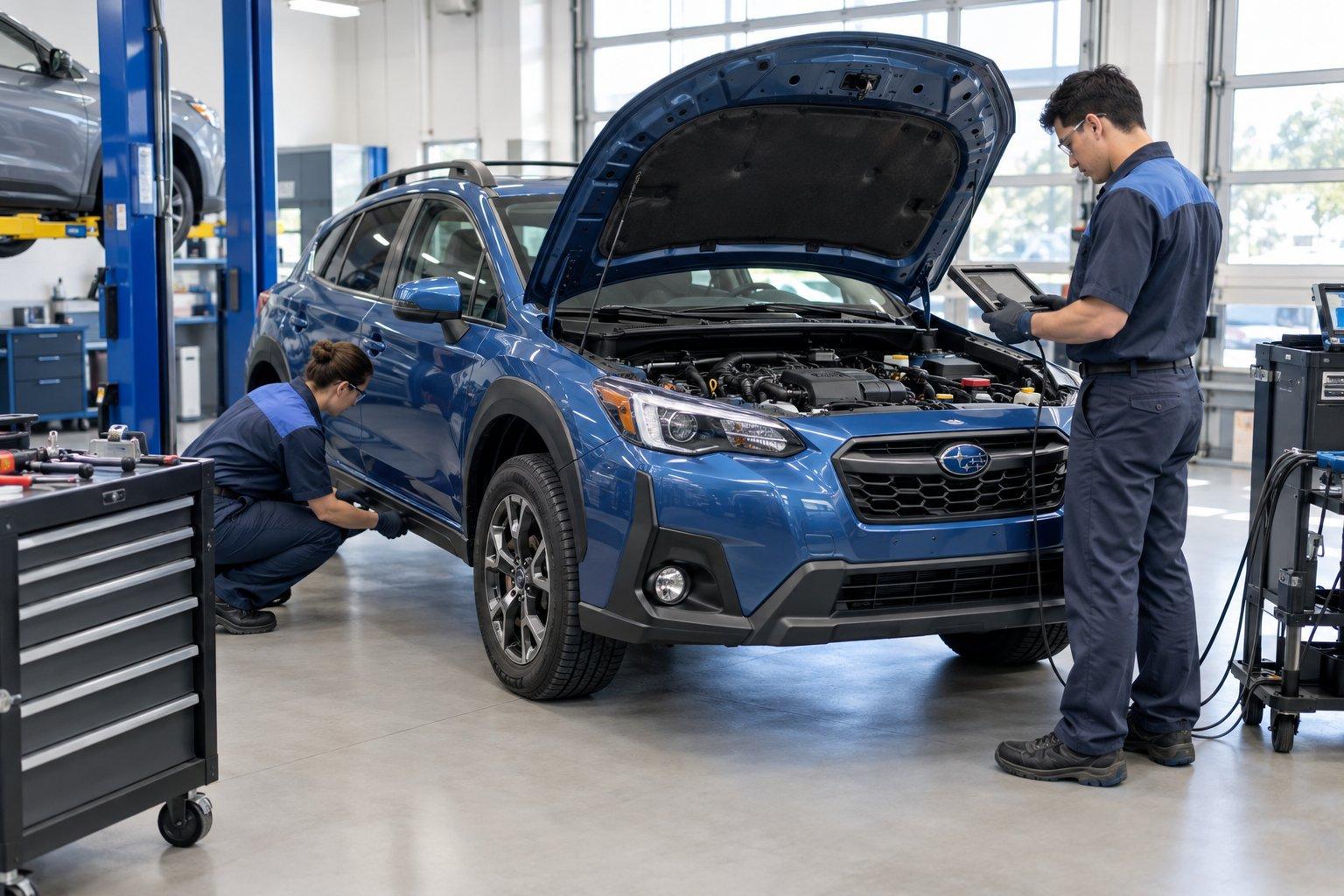
If you own a 2026 Crosstrek or Forester, enter your full VIN in Subaru’s or NHTSA’s recall lookup today, because only a VIN check can tell you whether your car is one of the few under the ball joint do-not-drive order. The other two recalls are wider in scope but less urgent, and each has its own free fix.
Keep two ideas apart as you read. Some recalls were announced during 2026 but cover older cars, such as the label recall for the 2019 Ascent. Others affect 2026-model-year vehicles. A model name showing up in a recall report never means every vehicle of that model is involved.
Which Subaru Vehicles Are Affected by the Latest Recalls?
The latest Subaru recalls cover the Crosstrek, Crosstrek Hybrid, Forester, Forester Hybrid, and Ascent, but each campaign targets a set group of vehicles picked from factory records. The ball joint recall involves only a handful of cars. The moonroof recall covers tens of thousands, and the label recall covers more than half a million.
| Campaign | Subaru No. | Models | Main Risk | Do Not Drive? |
|---|---|---|---|---|
| NHTSA 26V685 | WRI26 | 2026 Crosstrek, 2026 Forester | Front ball joint separation | Yes |
| NHTSA 26V346 | WRF-26 | 2026 Forester, 2026 Forester Hybrid | Moonroof glass detachment | No |
| NHTSA 26V436 | WRH-26 | 2019-2026 Ascent, 2025-2026 Forester and Forester Hybrid, 2026 Crosstrek Hybrid | Wrong axle weight rating on label | No |
2026 Crosstrek and Forester Ball Joint Separation Risk
This is the smallest and most serious of the three campaigns. Subaru reported it to NHTSA on October 19, 2026, and it covers eight 2026 Crosstrek and Forester vehicles in total.
The problem sits at the left-front lower control arm. A castle nut holds the ball joint in place there. On these cars, that nut may not have been fastened properly at the factory.
If the nut stays loose, the ball joint can pull away from the control arm. When that happens, the front wheel no longer stays in its normal position, and you can lose control of the car. Dealers will inspect the joint and replace the ball joint assembly as needed, free of charge.
2026 Forester and Forester Hybrid Moonroof Glass Detachment
This recall covers 69,663 vehicles: 65,656 gas Foresters built from June 19, 2025, to March 13, 2026, and 4,007 Forester Hybrids built from February 20 to March 17, 2026. Subaru estimates that about 2.9% of them have the defect.
The cause traces back to the moonroof supplier. Some glass panels were bonded to the sliding frame without enough primer, the agent that helps the glue grip. Over time, the bond can weaken, and the glass can come loose while you drive.
A loose panel is mainly a hazard to drivers behind you. Subaru knew of three U.S. technical reports and no crashes or injuries when it filed. The fix is a dealer check of the glass bond, with a new glass panel assembly installed if needed. Owners were mailed notices on July 6, 2026.
Certification Label Errors Affecting Ascent, Forester, and Crosstrek Models
This is the largest campaign, covering 541,237 vehicles. The label on the driver’s door pillar lists a wrong Gross Axle Weight Rating (GAWR), which is the most weight one axle is built to carry.
Here is how the population breaks down:
- 2019-2026 Ascent: 384,407 vehicles built March 19, 2018, to June 11, 2026
- 2025-2026 Forester Hybrid: 77,504 vehicles built November 28, 2024, to June 15, 2026
- 2025-2026 Forester: 49,946 vehicles built January 26, 2024, to June 11, 2026
- 2026 Crosstrek Hybrid: 29,380 vehicles built June 26, 2025, to June 12, 2026
The car itself has no mechanical fault. The risk is that you load it past its true limit because you trusted the label. That matters most if you haul heavy gear, tow, or pack the cargo area full. Subaru had no reports of crashes or injuries tied to this issue.
Which Vehicles Have a Do-Not-Drive Warning?
Only the ball joint campaign, NHTSA 26V685, carries a do-not-drive order. Neither the moonroof recall nor the label recall tells you to park your car, though both still need attention.
Why the Ball Joint Defect Requires Immediate Action
NHTSA’s acknowledgment letter to Subaru carried the subject line “Do Not Drive: Loss of Vehicle Control”. That wording reflects how a ball joint failure plays out on the road.
The ball joint links your front wheel to the suspension. If it separates, steering and wheel position can change without warning, at any speed. You may get no noise or warning light first.
Only eight cars are involved, so the odds that yours is one are very low. The stakes are high, though, and a quick VIN check costs you nothing. Treat a “yes” result as a firm instruction to stop driving the car.
What to Do Before Moving a Potentially Affected Vehicle
If your VIN comes back under campaign 26V685 or WRI26, follow these steps:
- Leave the car parked. Do not drive it to the dealer, even a short distance.
- Call Subaru’s recall line at 1-844-373-6614. Give your VIN and confirm the recall.
- Call your nearest Subaru retailer. Ask how they will get the car to the service bay and whether they can arrange transport.
- Ask about a loaner or rental. Policies differ by retailer, so ask directly.
- Keep records. Note dates, names, and any reference numbers from each call.
You can also reach NHTSA’s Vehicle Safety Hotline at 1-888-327-4236 (TTY 1-888-275-9171) if you have questions about your rights.
How Do You Check Your Subaru for an Open Recall?
Your 17-character VIN is the only reliable way to confirm whether a recall applies to your car. A few minutes with either official lookup tool will give you a clear answer.
Where to Find Your 17-Character VIN
You can find your VIN in several spots:
- Windshield: Look through the glass at the lower left of the windshield from outside the car.
- Registration card: The VIN is printed on it.
- Insurance card: Many insurers list it.
- Driver’s door pillar: It appears on the certification label, the same label tied to the WRH-26 recall.
Copy all 17 characters carefully. VINs never use the letters I, O, or Q, so a character that looks like an “O” is a zero.
How to Use Subaru and NHTSA Recall Lookups
Subaru’s owner recall tool searches by full VIN. It does not cover recalls issued before February 1998, which matters only if you own a much older Subaru.
NHTSA’s lookup works by VIN or license plate. If your car has no open recalls, you’ll see “0 unrepaired recalls associated with this VIN.” NHTSA also adds VINs from new recalls over time, so a clean result on a just-announced campaign is worth rechecking in a week or two.
Used-car shoppers should run the seller’s VIN before signing. A Crosstrek Hybrid or Ascent with an open label recall is easy to fix, but you want to know before you buy. If you need help, Subaru’s recall team takes calls Monday through Friday, 8:00 a.m. to 7:00 p.m. EST.
Why Model Year Alone Cannot Confirm Recall Eligibility
Subaru picked each recall group using factory production records. Two 2026 Foresters built a week apart may land on different sides of a recall.
Subaru’s own dealer notices say plainly that not every vehicle in a listed production range is affected. The ball joint campaign shows this clearly: millions of 2026 Crosstrek and Forester owners exist, but only eight cars are under the order. Your VIN settles the question; the model year on your title does not.
How Do Recall Repairs and Owner Notifications Work?
Every remedy in these three campaigns is free, and Subaru notifies owners by first-class mail. The timing and type of fix differ for each one.
What Repairs Are Available at No Charge?
| Campaign | Free Remedy |
|---|---|
| WRI26 ball joint | Dealer inspects and replaces the left-front lower control arm ball joint assembly as needed |
| WRF-26 moonroof | Dealer inspects the glass bond and replaces the glass panel assembly if needed |
| WRH-26 label | Subaru mails a corrected overlay label; a dealer will apply it free if you prefer |
For the label fix, the overlay goes on top of the old label at the bottom of the driver’s B-pillar. Never peel off the original label, since it carries your car’s production date. Clean it with a little isopropyl alcohol, let it dry, then press the overlay on from one edge to the other to avoid air bubbles.
How to Arrange Dealer Service and Ask About Towing
Call your Subaru retailer, give your VIN, and name the campaign number. Ask how long the visit will take and whether parts are on hand.
For the ball joint recall, your first question should be how the car gets to the shop without being driven. Ask whether the retailer will arrange a tow or flatbed. For moonroof and label work, you can drive in as normal. Bundling the label overlay with a routine oil change saves you a trip.
What to Do While Waiting for a Recall Letter or Remedy
Ball joint letters are expected to go out December 16, 2026. You do not need to wait for that letter; a VIN match is enough to act now.
Label recall letters explaining the risk were mailed August 27, 2026. Subaru plans remedy letters with the overlay for January 7 to 14, 2027, so that date is a plan and may shift. Until then, keep cargo and passenger loads modest, and check your owner’s manual for load guidance.
If you moved or bought your car used, update your address with Subaru so letters reach you.
Check Your VIN and Follow the Recall Instructions
Your next step is a VIN check on Subaru’s or NHTSA’s recall tool. If the result shows campaign 26V685 (WRI26), park the car and call your retailer about transport. A moonroof or label recall result means you can book a normal service visit for the free fix.
Recheck your VIN every few months and after any new recall news, since VINs are added over time. Keep Subaru’s recall line, 1-844-373-6614, saved in your phone for questions about any open campaign.
Category: Vehicle Recalls
Related Posts

Ford LED Mirror Lights Recall: Lincoln Navigator Models 2015-2017 Affected by Faulty Lighting
Ford has announced a significant safety recall affecting 35,328 Lincoln…
Ford Vehicle Recalls 2025: Complete Safety Alert Guide for Owners
Ford’s set a troubling record this year that every car…
2025 Ford F150 Problems: Common Issues to Know
The 2025 Ford F150 has drawn attention not just for…