Ford’s set a troubling record this year that every car owner should have on their…
18 April, 2026
0 Comments
1 category
The 2025 Ford F150 has drawn attention not just for its updated features but also for a growing list of owner-reported problems and manufacturer recalls.
If you’re shopping for this truck or already own one, knowing the most common 2025 Ford F-150 problems can help you spot issues early and make smarter choices.
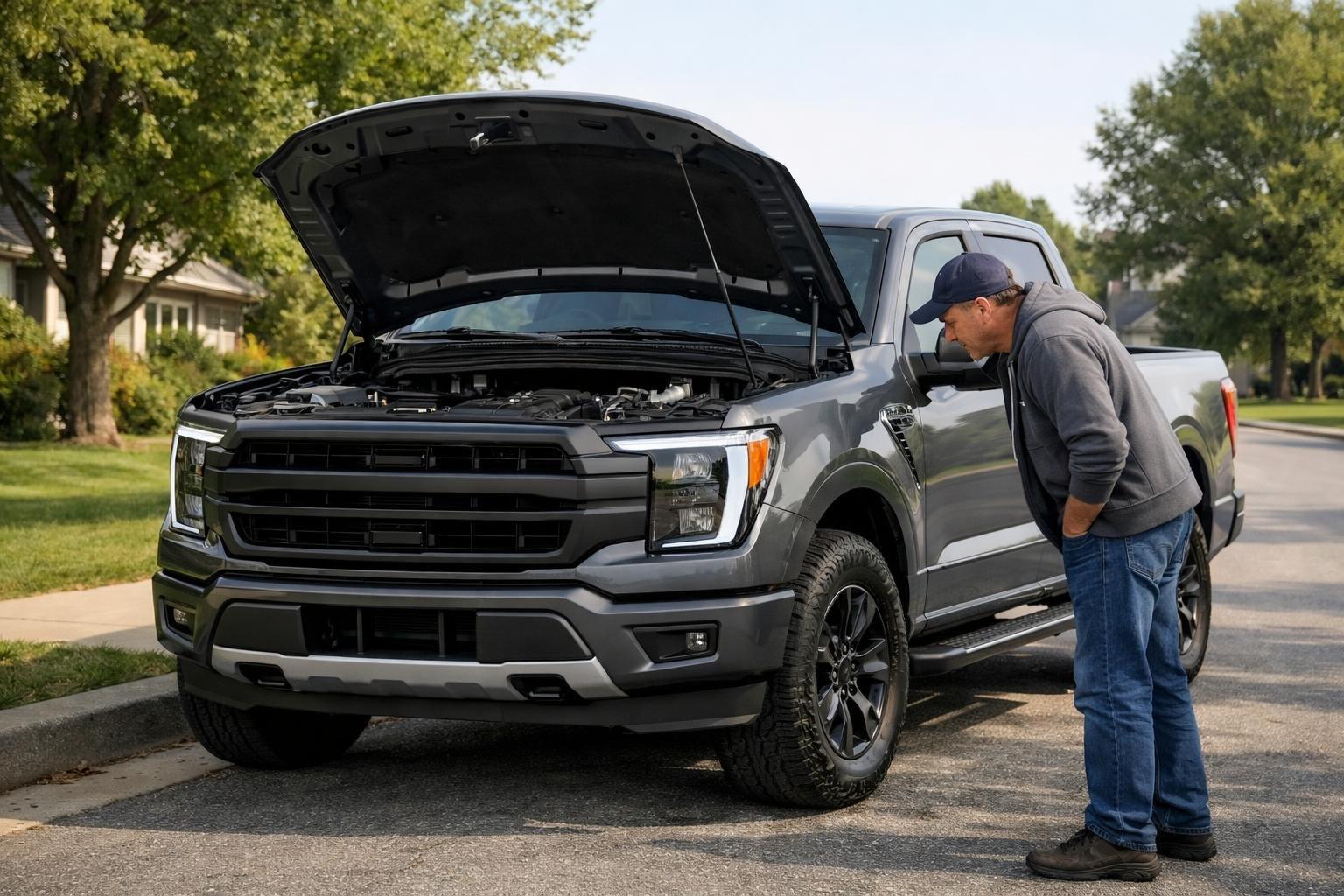
The most frequently reported 2025 Ford F-150 problems fall into three categories: brake failures with reduced power assist, transmission shift quality complaints, and electrical faults, including blank instrument clusters.
Ford has also issued multiple recalls for this model year, covering everything from brake booster software to engine wiring harnesses and steering components.
Most Reported Trouble Spots
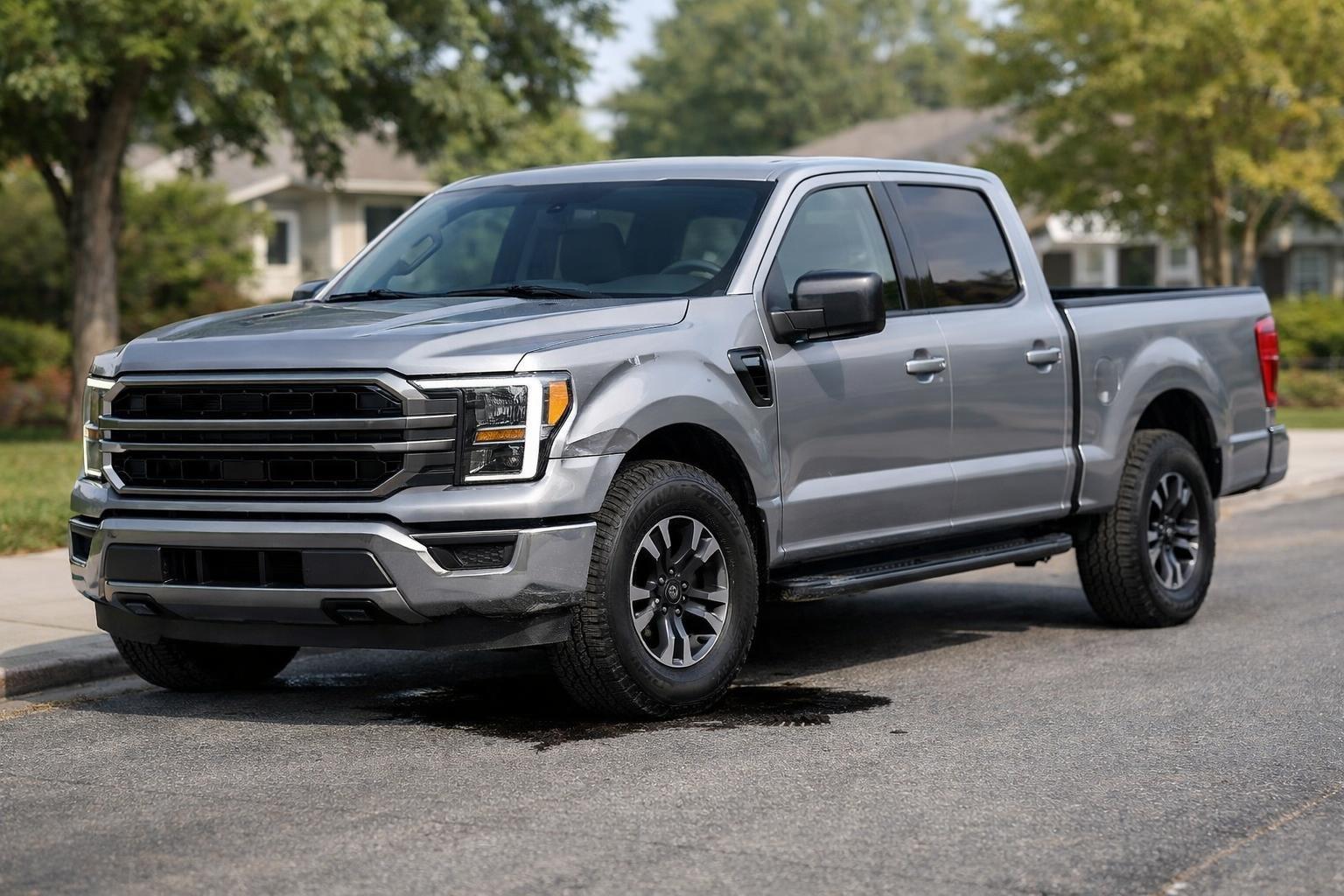
Brake system failures, rough transmission behavior, and electrical malfunctions are the top three complaints for the 2025 Ford F-150, based on NHTSA filings and consumer review platforms.
Each of these problems affects a different part of the driving experience, and some are definitely more serious than others.
Brake Failures and Reduced Power Assist
Brake complaints are among the most worrying 2025 Ford F-150 problems because they directly impact your ability to stop the truck.
Owners have described sudden loss of braking power, longer stopping distances, and brake warning lights coming on during or after a failure.
One NHTSA complaint mentioned a brake failure on the freeway at just 2,000 miles, forcing the driver to coast onto the shoulder with barely any stopping ability.
That’s a scary scenario for anyone.
Ford addressed part of this through recall 25V488000, announced in July 2025, targeting reduced power brake assist.
The fix is an over-the-air software update for the electronic brake booster module, so if your truck hasn’t received it, you’ll want to check with your dealer right away.
Transmission Warnings and Shift Quality Complaints
Transmission issues come in as the second most common complaint area.
Owners report powertrain failure warnings, harsh downshifts, and the truck not shifting right under normal driving.
These problems range from annoying drivability quirks to moments where the truck doesn’t respond as expected during acceleration or slowing down.
Recall 25V164000 covers an incorrectly machined transmission valve body that could cause unexpected forward movement or reverse gear failure—definitely something you don’t want to discover by surprise.
Electrical Faults and Blank Instrument Cluster Reports
Electrical system problems round out the top three.
The most alarming symptom is a totally dark instrument cluster, which means you lose access to the speedometer, gear indicator, and turn signals.
One owner said the cluster went black with no way to bring it back.
The dealership reset the system but called it “overloaded,” with no permanent fix offered.
Warning lights that pop up for no clear reason are another common complaint.
These electrical gremlins can make it tough to keep tabs on your truck’s status—and react to real alerts when they matter most.
Transmission and Drivability Concerns
Transmission-related complaints deserve a closer look because they affect both daily comfort and safety.
Harsh downshifts, weird gear behavior, and a major technical service bulletin all point to an area where the 2025 F-150 needs some real attention.
What Owners Mean by Rough Shifting
When owners talk about “rough shifting,” they usually mean noticeable jerks or lurches when changing gears.
This can happen during normal acceleration, coasting to a stop, or when the transmission can’t decide on a gear going up a slight hill.
Sometimes, the truck feels like it’s confused about which gear to pick.
It’s more than a comfort issue—unpredictable shifts can surprise you in traffic or while towing.
Harsh Downshifts in Real-World Driving
Harsh downshifts usually show up during low-speed slowing, like when you’re turning or stopping in city traffic.
The truck might suddenly drop a gear, sending a jolt through the drivetrain.
Some owners say it’s most noticeable when shifting from third to second or second to first.
The jolt is obvious enough that passengers sometimes comment on it too.
While this isn’t always a sign your transmission’s about to fail, it does suggest the shift calibration or hardware might need a look.
TSB 25-2045 and Gear Shift Module Symptoms
Ford issued technical service bulletins to address some of these problems.
TSB 25-2045 deals with gear shift module symptoms that can cause shift quality issues in the 2025 F-150.
If your truck keeps shifting roughly, ask your dealer if this TSB applies.
Dealers can reprogram or swap out the affected module.
A recent recall for nearly 1.4 million F-150 trucks also covers gearshift issues, showing just how widespread this concern is across several model years.
Recall and Safety Defect Overview
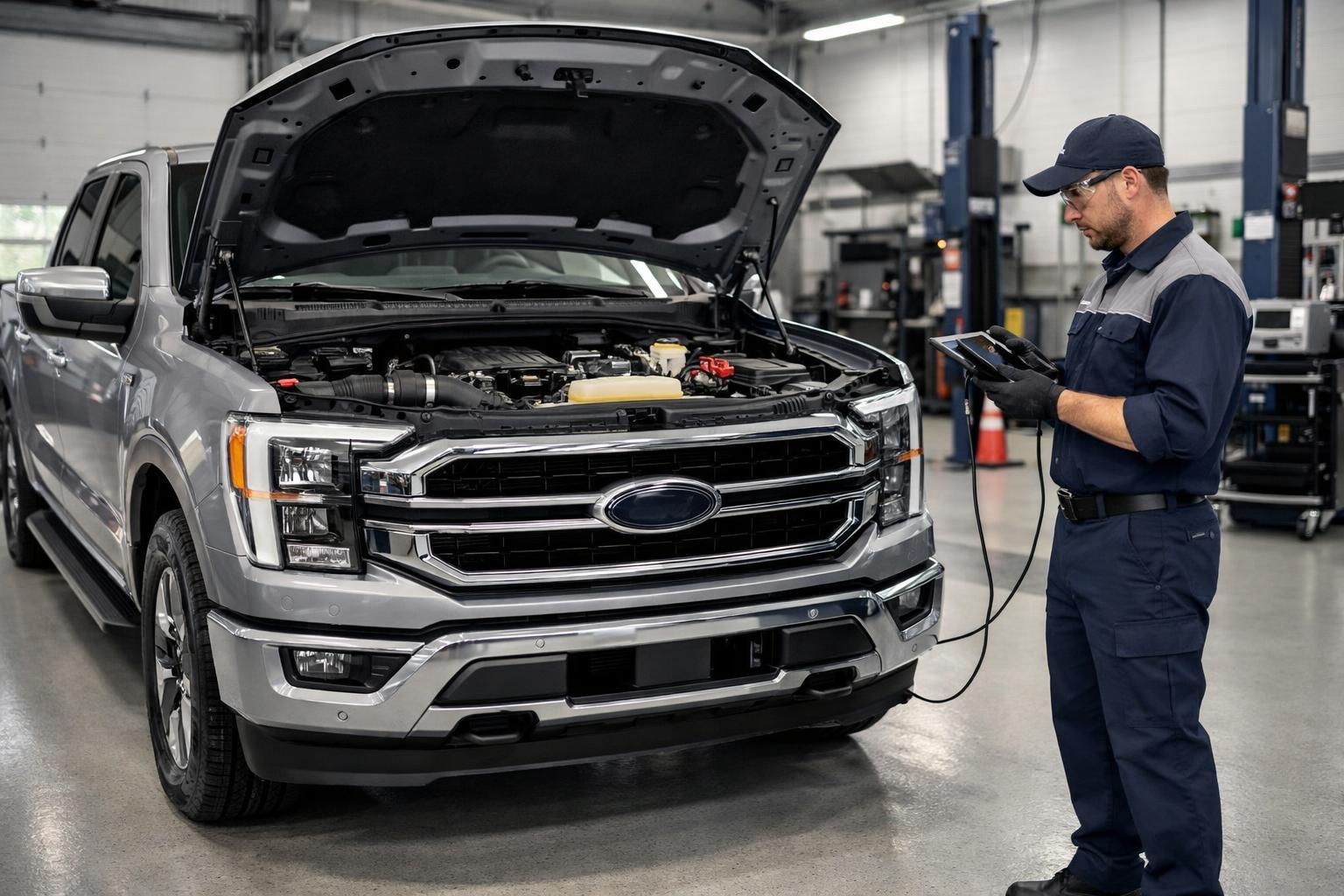
The 2025 Ford F-150 has racked up nine recalls as of early 2026, which is pretty significant for a truck that’s still new-ish.
These recalls hit braking, electrical, engine, steering, and drivetrain components.
Brake Booster and Braking System Campaigns
The most safety-critical recall is 25V488000, which covers reduced power brake assist.
The electronic brake booster module can fail, leaving you with much less stopping power.
Ford’s fix is an over-the-air software update, so you might not even need to visit a dealer.
You should check if your truck has this update by using your VIN on Ford’s recall lookup page.
Engine Harness, Stalling, and Electrical Recall Items
Recall 25V398000, from June 2025, covers the engine wire harness.
If the harness rubs against other parts and disconnects, you could end up with a stall while driving.
The fix is inspecting and relocating the affected parts.
There are also additional engine-related recalls:
- 25V344000: Connecting rod and rod bearing defects that can cause engine damage
- 25V198000 and 24V851000: Misaligned oil plugs, which can create fast oil leaks and possibly engine failure
Other Notable Recalls Affecting Steering, Engine, and Axle Components
Several other recalls hit important systems:
- 25V512000: Fatigued rear axle bolt in trucks with the Trailer Tow Max Duty package
- 25V309000: Loose fasteners on the lower intermediate shaft, which can mess with steering control
- 25V271000: Missing dashboard airbag warning label
- 25V164000: Incorrectly machined transmission valve body causing unexpected movement
Each recall has a specific fix, usually involving a dealer inspection and part replacement.
You can check for open recalls and investigations tied to your truck’s VIN through the NHTSA website.
Reliability Outlook for Buyers and Owners
Reliability is a big deal when you’re choosing a full-size truck.
The 2025 Ford F-150’s early track record gives you some real data to work with, even though we’re still waiting to see long-term patterns.
How 2025 Complaint Trends Compare With Other Model Years
The 2025 model year has brought more recalls than usual compared to recent F-150s.
Reliability tracking data gives the 2025 F-150 a score of 75 out of 100, with 13 recalls and 64 owner complaints so far.
That’s a fair number of complaints for a truck that’s only been out about a year.
Earlier 14th-generation F-150s (2021 to 2024) also had issues with transmissions, engines, and electrical systems, so some of these problems aren’t brand new.
What Current Data Suggests About Long-Term Dependability
The median complaint mileage for 2025 F-150 issues is about 6,500 miles, with powertrain problems at the top of the list.
Early-mileage failures like these usually point to manufacturing or calibration defects, not just normal wear and tear.
That’s important to know, since manufacturing defects are often covered by recalls and warranty repairs.
Wear-related issues later in the truck’s life are harder to predict right now.
How 2025 Ford F150 Reliability Compares With Expectations
The F-150 has long been one of America’s best-selling vehicles, and buyers expect solid reliability from the platform.
The 2025 model’s early recall count and complaint numbers are higher than a lot of shoppers might expect.
Still, Ford’s reliability record shows the F-150 often gets better as the model year matures and updates or parts revisions fix early problems.
If you’re considering a purchase, pay attention to the current recall situation and make sure any truck you’re looking at has had all the available fixes.
What to Check Before You Buy or Repair
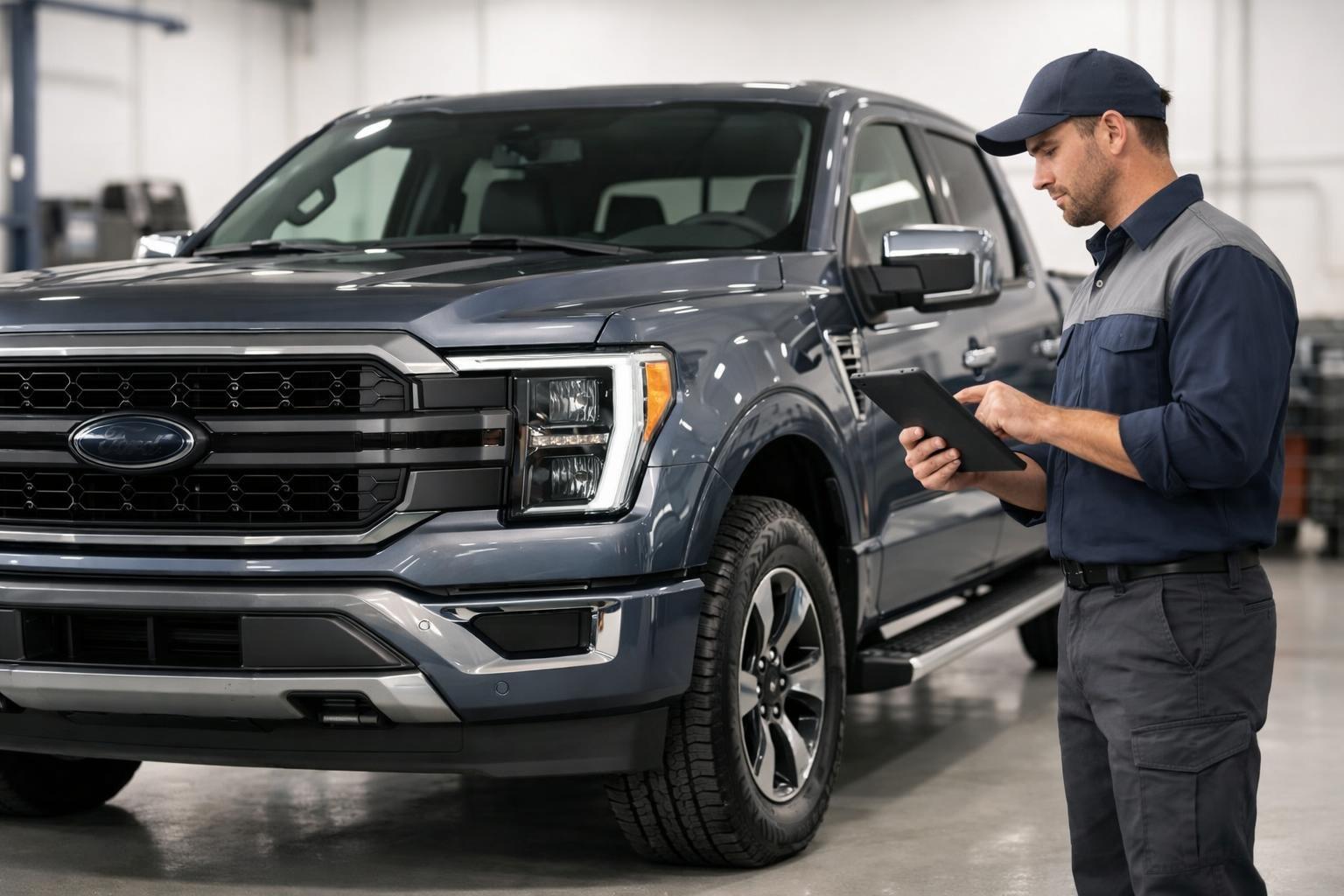
If you’re test-driving a 2025 F-150 or already dealing with ongoing issues, there are a few practical steps you can take to protect yourself.
Warning Signs to Look for on a Test Drive
Keep an eye out for these issues while you’re behind the wheel:
- Braking feel: Try pressing the brake pedal firmly at different speeds. If it feels spongy, responds slowly, or you see a warning light pop up, that’s not great.
- Shift quality: Drive through some stop-and-go traffic, then hit a highway on-ramp. Notice if there are any rough downshifts, jerky gear changes, or weird pauses when you accelerate.
- Instrument cluster: Glance at the dashboard for any flickering, dimming, or strange warning lights that show up and vanish for no good reason.
- Steering response: At low speeds, turn the wheel all the way in both directions. Listen for odd noises and see if the steering feels loose or off.
Service Records, Software Updates, and Recall Completion
Before you buy, ask the dealer for a full service history. Make sure all recalls are done—don’t just take their word for it.
Double-check the truck’s VIN on the NHTSA recall database or Ford’s lookup tool.
Software updates matter a lot with the 2025 F-150, since some fixes—like the brake booster recall—come over the air.
Ask if the software is totally current. If TSB 25-2045 is relevant, make sure the gear shift module was actually fixed.
When to Escalate a Repeat Problem With the Dealer
If you’ve brought your truck in for the same issue more than once and it’s still not fixed, it’s time to start a paper trail. Hang onto every repair order you get.
Write down the symptoms each time you notice them. Make sure to note the dates and mileage whenever you visit the dealer.
Problems that keep coming back—especially if they mess with safety, how you use the truck, or its value—might qualify for your state’s lemon law. An experienced lemon law attorney can help you figure out your next steps.
Don’t wait around or settle for fuzzy explanations. Keep your records organized, and act quickly if things aren’t getting resolved.
Category: Vehicle Recalls
Related Posts

Ram 1500 Recall: 2026 Affected Trucks and What to Do
Ford-style surprises aside, the newest safety notice for Ram owners…

2018 Chevy Silverado Problems: What Owners Should Know
Thinking about a used full-size truck? The 2018 Chevy Silverado…
In 2024, Mercedes-Benz Has Issued Recalls for Various Models Due to Safety Concerns
Mercedes-Benz, a brand known for luxury and innovation, has faced…