
Your tires talk to you every day. The marks and patterns they develop tell a story about your car’s health, your driving habits, and what needs fixing.
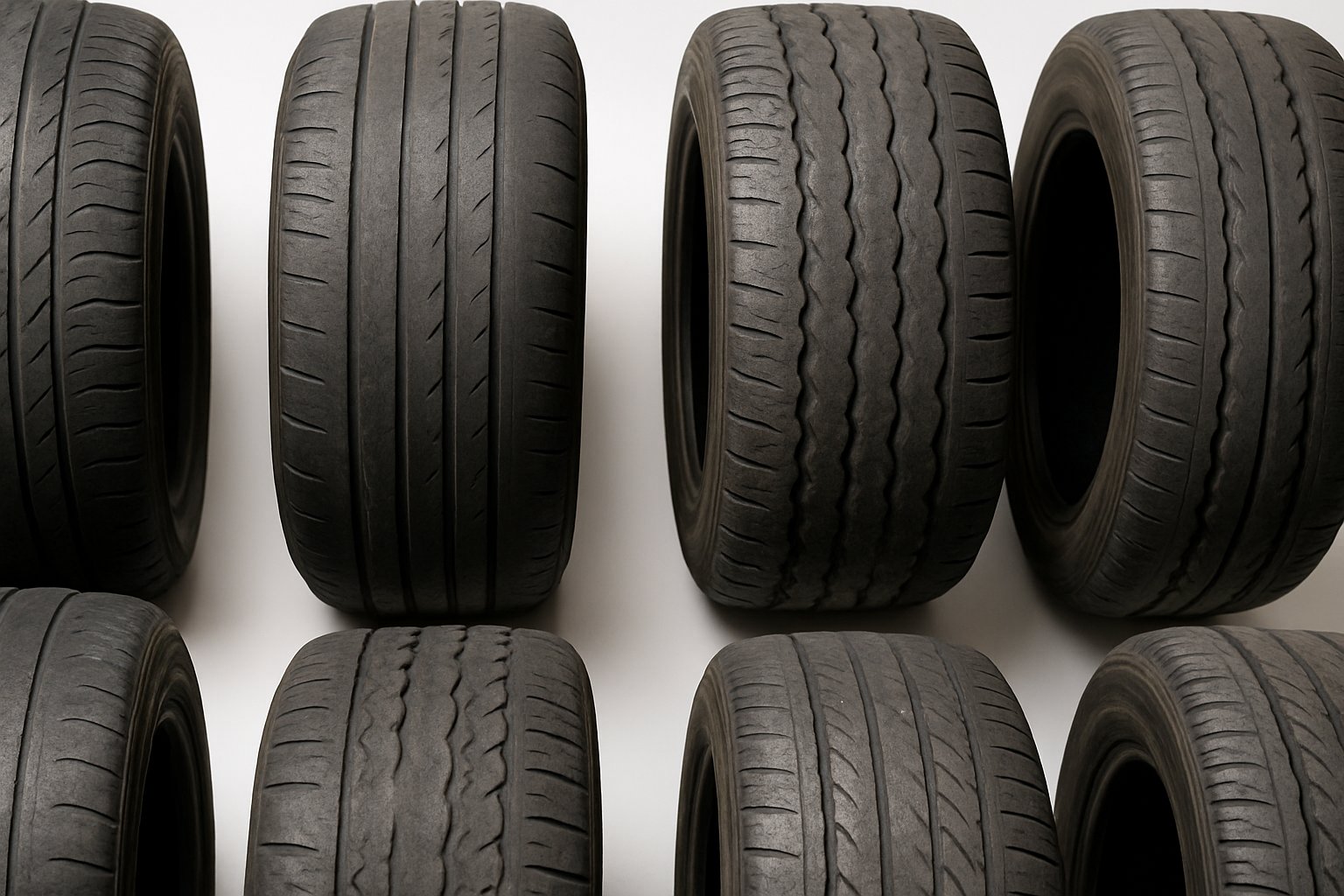
Reading tire wear patterns correctly can help you spot problems with alignment, tire pressure, and suspension before they become expensive repairs. These patterns show up as different types of wear across your tire’s surface.
Some tires wear more on the edges. Others wear down the center or create strange, bumpy patterns.
I’ll show you how to read these patterns like a mechanic would. You’ll learn what causes each type of wear and how to fix the problems behind them.
Understanding Tire Wear Patterns
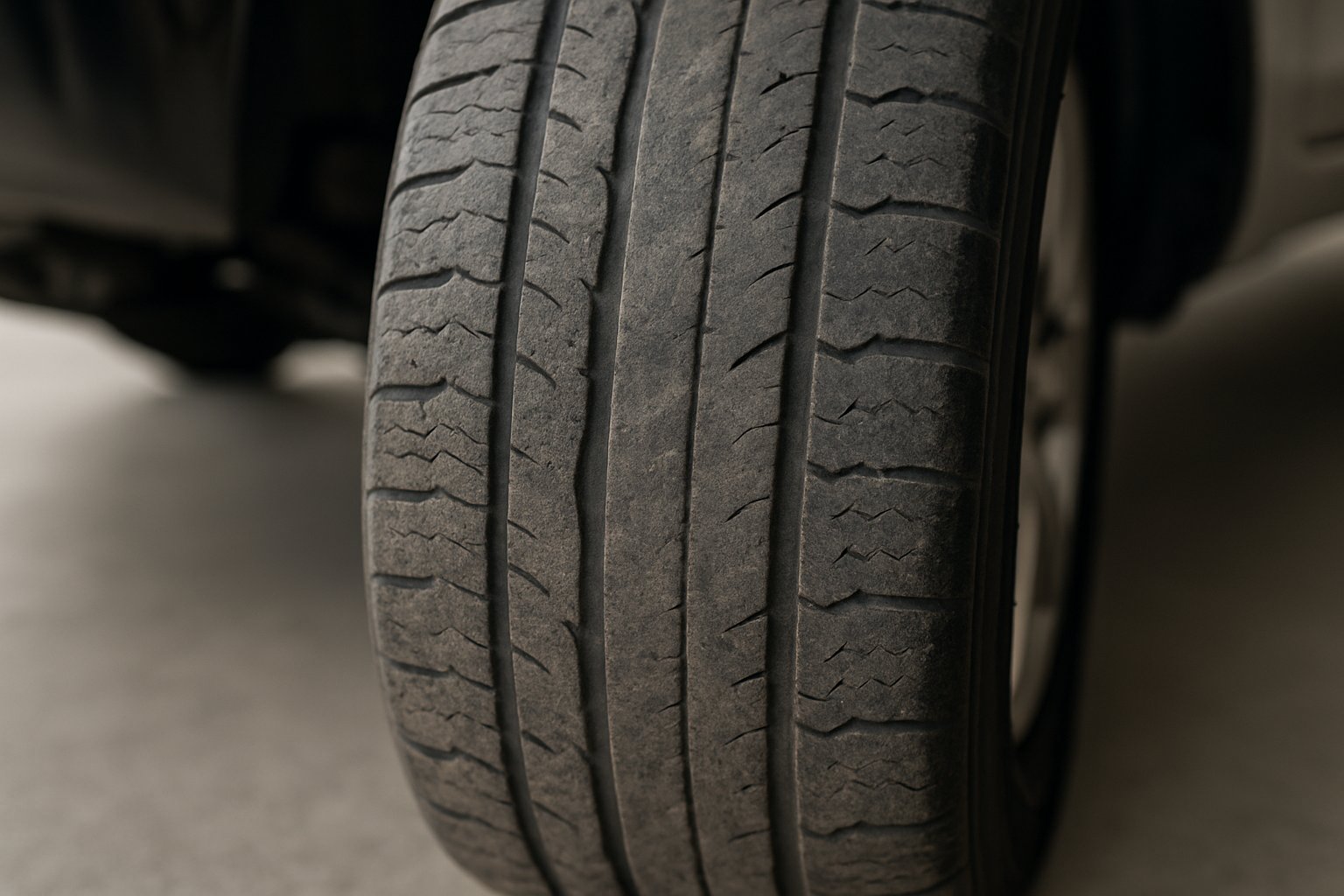
Your tires show clear signs when something is wrong with your car. Different wear patterns tell you about problems with air pressure, wheel alignment, or suspension parts.
What Causes Tire Wear
I find that tire wear happens for several key reasons. Improper air pressure is the most common cause I see.
When tires have too little air, the outer edges wear faster. Too much air makes the center wear down first.
Poor wheel alignment creates uneven wear across the tire surface. This happens when your wheels don’t point straight ahead.
Suspension problems also cause irregular wear patterns. Worn shock absorbers or struts let tires bounce too much on the road.
Your driving habits affect wear too. Hard braking, fast cornering, and quick acceleration all speed up tire wear.
Types of Tire Tread Wear
I see several common wear patterns that each mean different things:
Center wear shows up when tires have too much air pressure. The middle of the tire touches the road more than the edges.
Edge wear happens when tire pressure is too low. Both outer edges wear faster than the center.
One-sided wear means your alignment is off. One edge of the tire wears much faster than the other side.
Cupping or scalloping creates a wavy pattern around the tire. This usually means your suspension needs repair.
Feathering makes the tire feel rough when you run your hand across it. This also points to alignment problems.
Importance of Recognizing Patterns
Spotting these patterns early saves you money and keeps you safe. I recommend checking your tires every month for unusual wear.
Safety comes first when tires wear unevenly. Bad tires can cause blowouts or make your car hard to control in the rain or snow.
Cost savings add up quickly when you catch problems early. Fixing alignment costs less than buying new tires.
Better performance happens when your tires wear evenly. Your car handles better and uses less gas with properly maintained tires.
Look for wear patterns during regular tire rotations. Take photos to track changes over time.
Common Types of Tire Wear
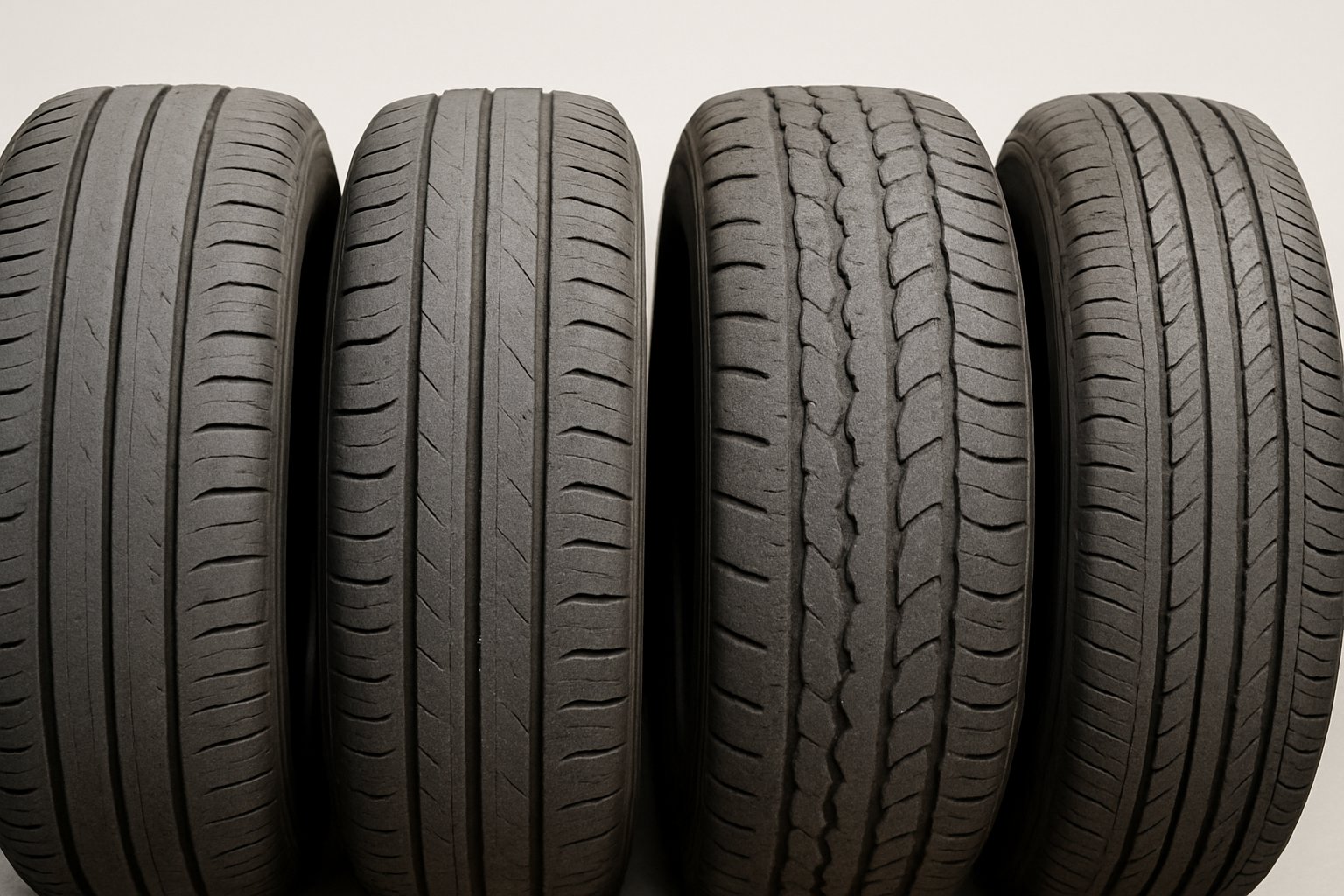
Tire wear patterns reveal specific problems with your vehicle. Center wear shows overinflation issues, while edge wear points to underinflation or alignment problems.
Center Wear
I see center wear when the middle of the tire tread wears down faster than the edges. This creates a smooth strip down the center of the tire.
Overinflation causes this pattern. When I put too much air in my tires, the center bulges out more than the edges.
Only the middle section touches the road properly. The tire loses traction because less rubber contacts the pavement.
My ride feels harsher and bumpier than normal.
I can fix center wear by:
- Checking tire pressure monthly
- Reducing air pressure to manufacturer specs
- Using a quality tire gauge for accuracy
The correct pressure is usually on a sticker inside the driver’s door frame. I should check the pressure when the tires are cold for the most accurate reading.
Edge Wear
Edge wear happens when both outer edges of my tire wear faster than the center. The middle tread stays higher while the sides wear down.
Underinflation is the main cause. Low air pressure makes the tire’s sidewalls flex too much.
The edges press harder against the road surface. This pattern reduces my tire’s lifespan significantly.
The edges can wear completely through while the center still looks new. My steering feels less responsive with edge wear.
The car may pull to one side or feel unstable during turns.
Signs of edge wear:
- Worn edges on both sides
- Center tread looks almost new
- The tire feels soft or squishy
- Poor fuel economy
I fix edge wear by adding air to reach the proper pressure. I should also inspect for slow leaks that cause gradual pressure loss.
Cupping
Cupping creates small, round, worn spots across my tire’s surface. These cups or scallops feel bumpy when I run my hand over the tread.
Suspension problems cause cupping. Worn shock absorbers or struts let my tire bounce on the road.
Bad wheel bearings also create this pattern. The tire makes noise while driving.
I hear a rhythmic thumping or rumbling sound that matches my speed. Cupping affects my vehicle’s handling.
The car feels less stable and may vibrate through the steering wheel.
Common causes include:
- Worn shock absorbers
- Bad struts
- Loose wheel bearings
- Bent suspension parts
I need professional repair for cupping issues. A mechanic should inspect my suspension system and replace worn parts.
Feathering
Feathering makes my tire tread feel smooth in one direction and sharp in the other. The tread blocks wear at an angle instead of evenly.
Toe misalignment causes this pattern. My wheels point slightly inward or outward instead of straight ahead.
This makes the tire scrub sideways as it rolls. I can check for feathering by running my hand across the tread.
One direction feels smooth while the other catches on sharp edges. My car may pull to one side while driving.
The steering wheel might not center properly after turns. Feathering wastes fuel and shortens tire life.
The sideways scrubbing creates extra rolling resistance.
Alignment fixes feathering. A shop adjusts my wheel angles to manufacturer specifications. This stops the sideways scrubbing motion.
I should get alignment checked after hitting large potholes or curbs. Suspension work also requires alignment adjustment.
Uneven Tire Wear and Its Causes
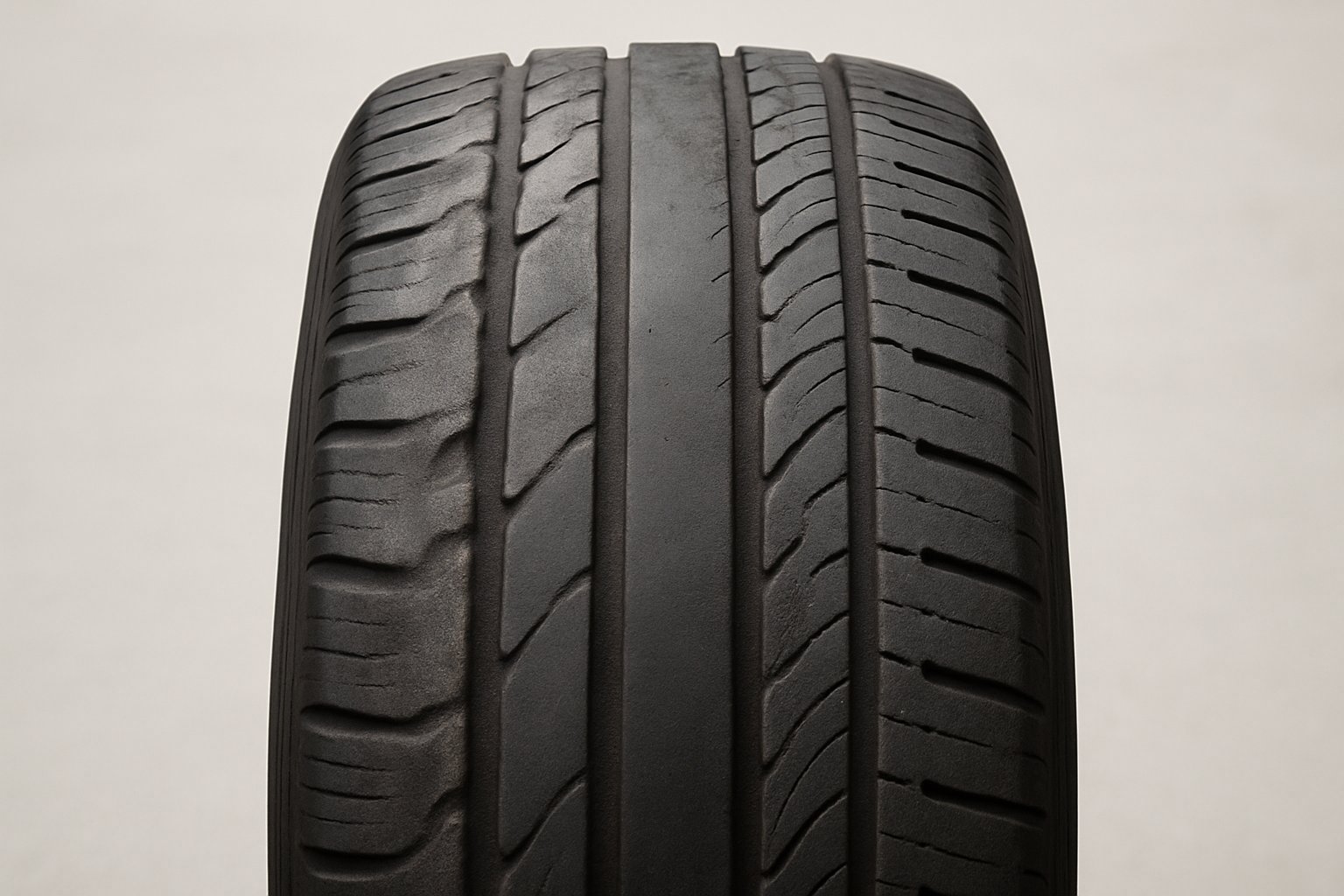
Uneven tire wear happens when your tires don’t wear down at the same rate across their surface. Three main issues cause this problem: wrong tire pressure, poor wheel alignment, and broken suspension parts.
Incorrect Tire Pressure
I see tire pressure problems cause many uneven wear patterns. When tires have too much air, the center of the tread wears faster than the edges.
When tires don’t have enough air, the outer edges wear down quickly while the center stays good.
Over-inflated tires create a rounded contact patch with the road. This means only the middle part touches the ground during driving.
The result is faster wear in the center strip of the tire. Under-inflated tires do the opposite.
The tire flattens out too much, putting extra pressure on the edges. I notice this creates wear on both outer edges while the middle stays protected.
Temperature changes affect tire pressure. Cold weather drops pressure by about 1-2 psi for every 10 degrees.
Hot weather increases it. Checking tire pressure monthly prevents these problems.
Use the pressure listed on your driver’s side door jamb, not the number on the tire sidewall.
Wheel Alignment Issues
Misaligned wheels cause specific wear patterns that I can spot easily. The three main alignment angles are toe, camber, and caster.
Each creates different wear problems when they’re wrong. Toe misalignment happens when tires point in or out instead of straight ahead.
This causes feathering, where one edge of each tread block feels smooth and the other feels sharp. Camber problems occur when wheels tilt too much toward or away from the car.
Negative camber wears the inside edge. Positive camber wears the outside edge.
Hitting potholes, curbs, or getting into accidents knocks wheels out of alignment. Normal driving also slowly changes alignment over time.
Most cars need alignment checks every 6,000 miles or when you notice pulling to one side.
Suspension Problems
Worn suspension parts create irregular wear patterns that look different from pressure or alignment issues. The most common pattern is called cupping or scalloping.
Cupping appears as high and low spots around the tire’s circumference. This happens when worn shocks or struts let the tire bounce instead of staying firmly on the road.
Bad wheel bearings cause similar problems. They let wheels wobble slightly, creating uneven contact with the pavement.
Worn ball joints and tie rod ends also affect how tires meet the road. These parts connect your wheels to the steering and suspension systems.
I recommend having suspension parts checked when tires show cupping patterns. Replacing tires without fixing suspension problems just ruins the new tires faster.
Diagnosing Tire Wear Patterns
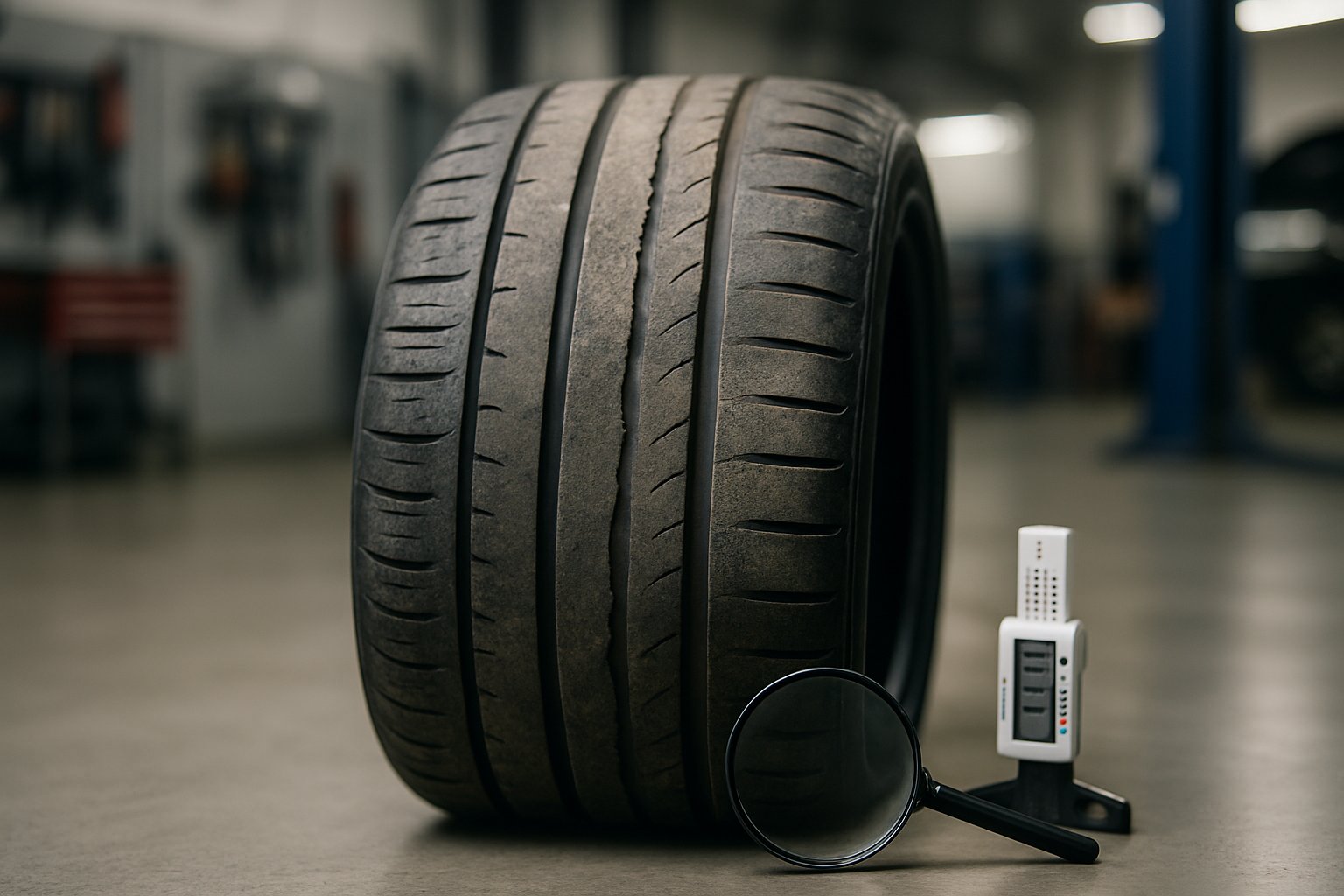
Proper diagnosis requires both visual inspection skills and understanding of tread indicators. I recommend combining hands-on examination techniques with professional tools for accurate results.
Visual Inspection Techniques
I start every tire inspection by looking at the overall wear pattern across the tire surface. This gives me the first clues about what might be wrong.
Center wear appears as excessive tread loss down the middle of the tire. This pattern tells me the tire was overinflated for too long.
Edge wear shows up on either the inner or outer edges. When I see wear on both edges but good tread in the center, it means underinflation.
Wear on just one edge points to alignment problems. Cupping creates a scalloped pattern that I can feel by running my hand across the tread.
This bumpy texture indicates worn suspension parts like shocks or struts. I check each tire systematically by walking around the vehicle.
I look for differences between tires on the same axle and compare front to rear patterns. Feathering feels smooth in one direction but rough in the other when I run my fingers across the tread blocks.
This texture means toe alignment is off.
How to Read Tire Tread Indicators
Built-in tread wear indicators help me figure out how much life my tires have left. These small rubber bars are tucked in the grooves between tread blocks.
When the tread gets worn down to the same height as those indicators, it means replacement time. I like the penny test for a quick check—just stick a penny in the groove.
If Lincoln’s head is fully visible, that’s less than 2/32 inch of tread left. At that point, yep, new tires are needed.
I also use a tread depth gauge when I want to get a bit more precise. New tires usually start with about 10/32 to 12/32 inch of tread.
Uneven indicator exposure across the tire can point to other issues. If one side shows the indicator first, it could mean alignment or inflation problems.
Professional Assessment Methods
Shops use specialized tools to measure tread and analyze wear patterns. For anything weird or complicated, I’d lean on the pros.
Alignment machines check wheel angles like camber, caster, and toe. These numbers show what needs adjusting.
Tread depth gauges give readings at the center, inside, and outside of each tire. I try to check all three spots.
Suspension testing equipment looks for worn parts that mess with the tread. Think ball joints, tie rods, shocks—the usual suspects.
I jot down all my measurements and compare them with the specs from the manufacturer. That way, I know what needs fixing first.
Computer analysis sometimes reveals patterns you can’t spot by eye alone.
Preventing Abnormal Tire Wear
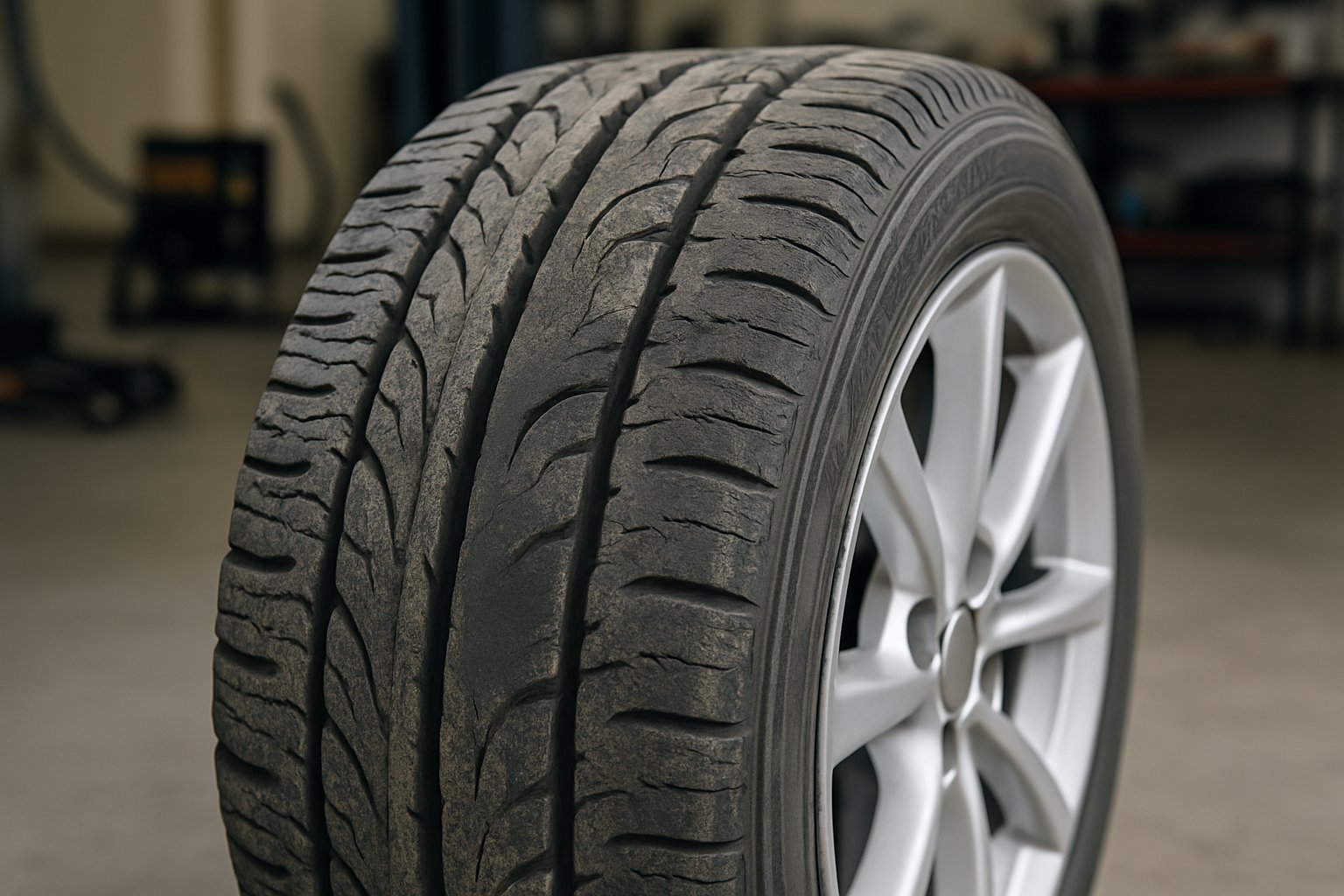
Regular maintenance, rotating tires, and keeping the right air pressure are my main tricks for avoiding weird tire wear. These habits help tires last longer, too.
Routine Tire Maintenance
I check my tires at least once a month for anything odd. Uneven tread, cracks, or bulges on the sidewall catch my eye.
A tread depth gauge helps me measure wear across the tire. Legally, 2/32 of an inch is the minimum, but I swap mine at 4/32 to be safe.
Key maintenance tasks include:
- Looking over tread patterns
- Checking for cuts or punctures
- Inspecting sidewalls
- Measuring tread depth regularly
Cleaning with mild soap and water keeps debris and chemicals from eating at the rubber. Road salt, especially, can do a number over time.
I check alignment every 10,000 miles or if the car starts pulling to one side. Bad alignment chews up tire edges fast.
Replacing worn suspension parts is a must. Bad shocks or struts can cause cupping and shorten tire life.
Rotation and Balancing
I rotate my tires every 5,000 to 7,500 miles to keep wear even. Moving tires around helps them all wear at about the same pace.
Common rotation patterns:
- Front-wheel drive: Front tires go straight back, rear tires cross to the front
- Rear-wheel drive: Rear tires go straight forward, front tires cross to the back
- All-wheel drive: Use an X-pattern, crossing all four tires
Tire balancing sorts out weight differences that cause vibration and weird wear. I get mine balanced with new tires, or if I feel shaking at highway speeds.
Signs you need balancing? Steering wheel shakes, seat vibration, or scalloped tread patterns.
Pros use weights to fix heavy spots. That stops the bouncing that can wear out certain tread areas way too fast.
Proper Inflation Practices
I check tire pressure monthly, always when the tires are cold. Big temperature swings can change pressure by about 1 PSI for every 10 degrees.
Correct pressure is on a sticker inside the driver’s door jamb—not the number on the tire itself. That’s a common mistake.
Effects of wrong pressure:
- Overinflation: Center tread wears out too fast, ride gets rough
- Underinflation: Edges wear, gas mileage drops, heat builds up
I add air a little at a time and double-check the pressure. Both overinflating and underinflating mess up wear patterns.
Some folks use nitrogen instead of air. Nitrogen holds pressure longer and keeps moisture out, so it’s worth considering.
Don’t forget about the spare. A flat spare is useless when you really need it.
How Weather and Driving Conditions Affect Tire Wear
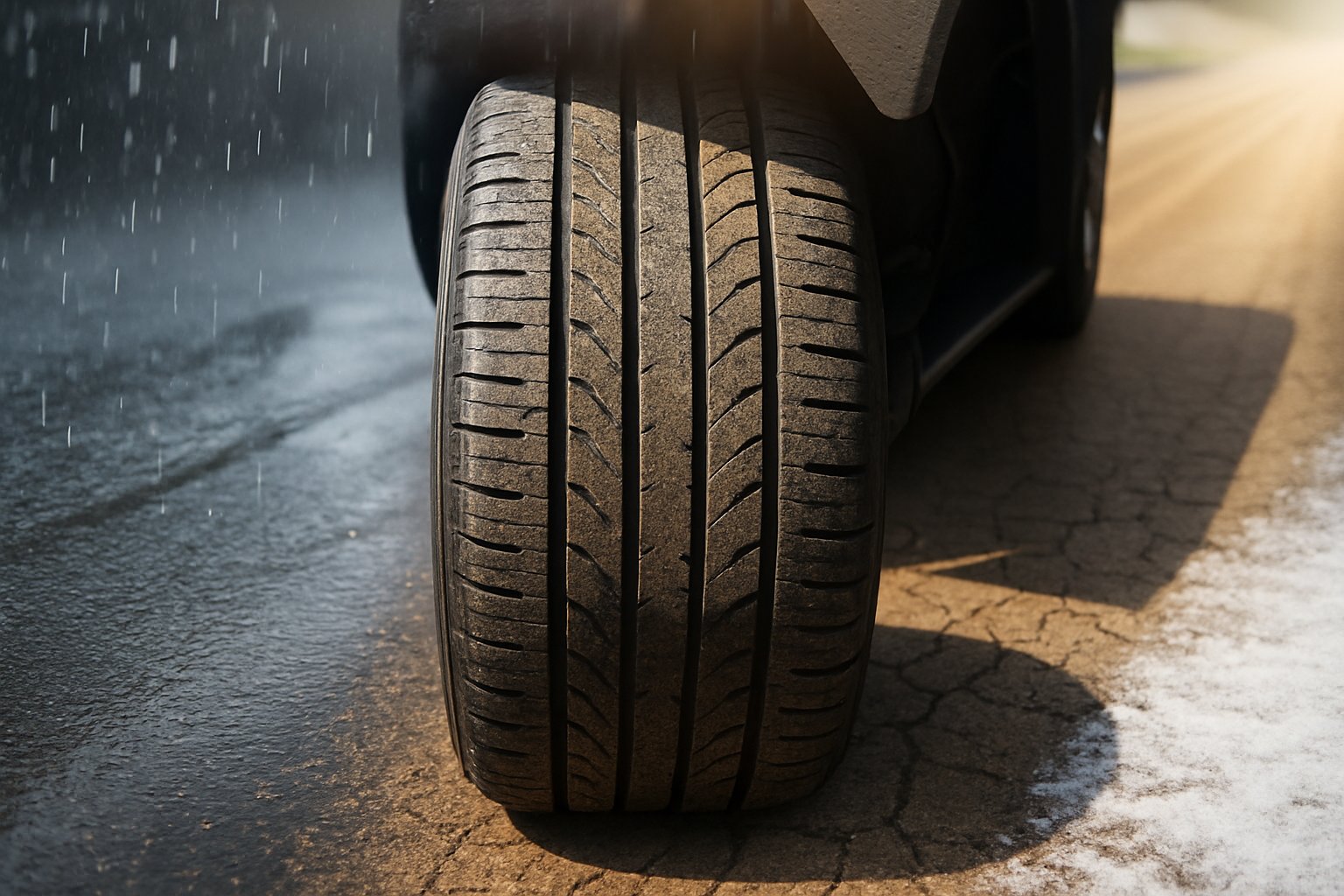
The weather and how I drive make a huge difference in how fast my tires wear. Temperature swings mess with pressure and rubber flexibility, and wet roads change how much grip I get.
Impact of Wet and Dry Surfaces
Wet roads are tricky. Water forms a layer between the tire and pavement, so the tire has to work harder to grip.
This extra effort changes the way tread wears down. The grooves channel water away, but once those wear down, wet traction drops fast.
Dry roads usually give me more even wear, since the tire’s in steady contact with the road. Still, hot pavement can speed up wear overall.
Wet conditions can cause:
- Faster wear on outer edges
- Shorter tire life if the tread is already low
- Uneven wear if the pressure isn’t right
I try to keep the tread above 4/32 inch for rainy days. Anything less, and the stopping distance gets scary.
Seasonal Temperature Changes
Temperature definitely affects tires. For every 10-degree drop, I lose about 1 PSI of pressure.
Cold weather makes rubber stiff and less grippy. That shrinks the contact patch and can cause weird edge wear, especially if pressure drops.
Hot weather bumps up pressure and softens the rubber. If the tire’s overinflated, the center wears out first. Extreme heat can also break down the tire faster.
| Temperature | Effect on Pressure | Wear Pattern |
|---|---|---|
| Cold | Decreases 1 PSI per 10°F | Outer edge wear |
| Hot | Increases pressure | Center wear |
I try to check my tire pressure every month. The sticker on the door jamb is the number to trust—not the sidewall.
Driving Habits and Their Effects
The way I drive really shows up in my tire wear. Aggressive driving builds up heat and wears out the rubber faster.
Hard acceleration spins the rear tires and chews up tread. The rubber gets hot and starts breaking down.
Heavy braking can create flat spots and eat up the front tires, especially on hot roads.
Fast cornering wears out the outer edges. The sidewall flexes more, which builds heat and uneven contact.
Common wear patterns from driving habits:
- Cupping from worn shocks
- Edge wear from fast turns
- Center wear from over-inflation
- Flat spots from hard braking
Smoother acceleration and easy braking help tires last. I try to rotate my tires every 5,000 to 8,000 miles to keep things even.
When to Replace Tires Due to Wear
I swap out my tires when the tread drops to 2/32 inch or if there’s damage like cracks or bulges that can’t be fixed.
Minimum Tread Depth Guidelines
Checking tread depth regularly tells me when it’s time for new rubber. The legal minimum is 2/32 inches, but I try not to push it that far.
Most experts say to replace at 4/32 inches for better grip and safety. Under that, stopping on wet roads takes way longer.
Here’s how I check tread:
- Penny test: Penny in the groove, Lincoln’s head down. If I see the top, it’s 2/32 inch or less.
- Quarter test: For 4/32 inch, use a quarter. If Washington’s head shows, time for new tires.
- Tread depth gauge: Gives an exact number in 32nds of an inch.
Tread wear bars look like smooth strips across the grooves. When the tread is even with those, I know I’ve hit 2/32 inch and need to replace the tire now.
Signs of Irreversible Tire Damage
It’s not just tread depth—I also watch for damage that makes a tire unsafe.
Sidewall cracks show up as little lines in the rubber, usually from age or sun damage. These can’t be fixed, so I replaced the tire.
Bulges or bubbles on the side mean something inside the tire is broken. That’s a blowout risk, so out it goes.
Punctures bigger than 1/4 inch can’t be safely patched. The same goes for holes on the sidewall or shoulder.
Uneven wear patterns like cupping or wear on just one edge usually mean alignment issues. If it’s bad, I need new tires even if there’s some tread left.
Age-related deterioration is sneaky. Even with good tread, most experts say to replace tires after 6-10 years, no matter what they look like.
The Role of Tire Construction in Wear Patterns
The way a tire is built changes how it wears down over time. Different construction methods can leave their own signature on the road, at least in my experience.
Symmetrical tire construction uses the same tread pattern across the whole surface. With proper care, this design usually leads to even wear.
The balanced structure helps tires last longer, especially on passenger cars and light trucks.
Asymmetrical construction features different tread patterns on each side. The inner and outer sections tackle different road conditions.
If you skip regular rotation, these can start to wear unevenly. It’s one of those details that sneaks up on you.
Directional tires have a built-in rolling direction. They really need to be mounted the right way, or you’ll get lousy wear.
The V-shaped grooves are only effective when they’re pointed the right way. It’s surprisingly easy to get wrong if you’re not paying attention.
| Construction Type | Wear Pattern | Best Use |
|---|---|---|
| Symmetrical | Even wear | Daily driving |
| Asymmetrical | Variable wear | Performance cars |
| Directional | Pattern-specific | Wet conditions |
The internal structure matters for wear, too. Tires with steel belts tend to wear more evenly than those without.
The number of plies changes how the tire flexes and meets the road. It’s not something most people think about, but it makes a difference.
Sidewall construction shapes how weight spreads across the tread. Stiffer sidewalls help the tire keep even contact with the pavement.
Flexible sidewalls, on the other hand, can cause odd wear patterns—especially around the edges. It’s a trade-off between comfort and longevity, really.
Tire compound hardness is a big deal, too. Softer rubber wears out faster but gives you more grip, while harder compounds last longer but might develop flat spots if your car sits for a while.
1 thought on “Tire Wear Patterns: How to Read Your Tires and Prevent Premature Damage”
Comments are closed.