
Your car’s struts work hard every day to keep your ride smooth and safe. When they start to wear out, they send clear warning signals that you shouldn’t ignore.
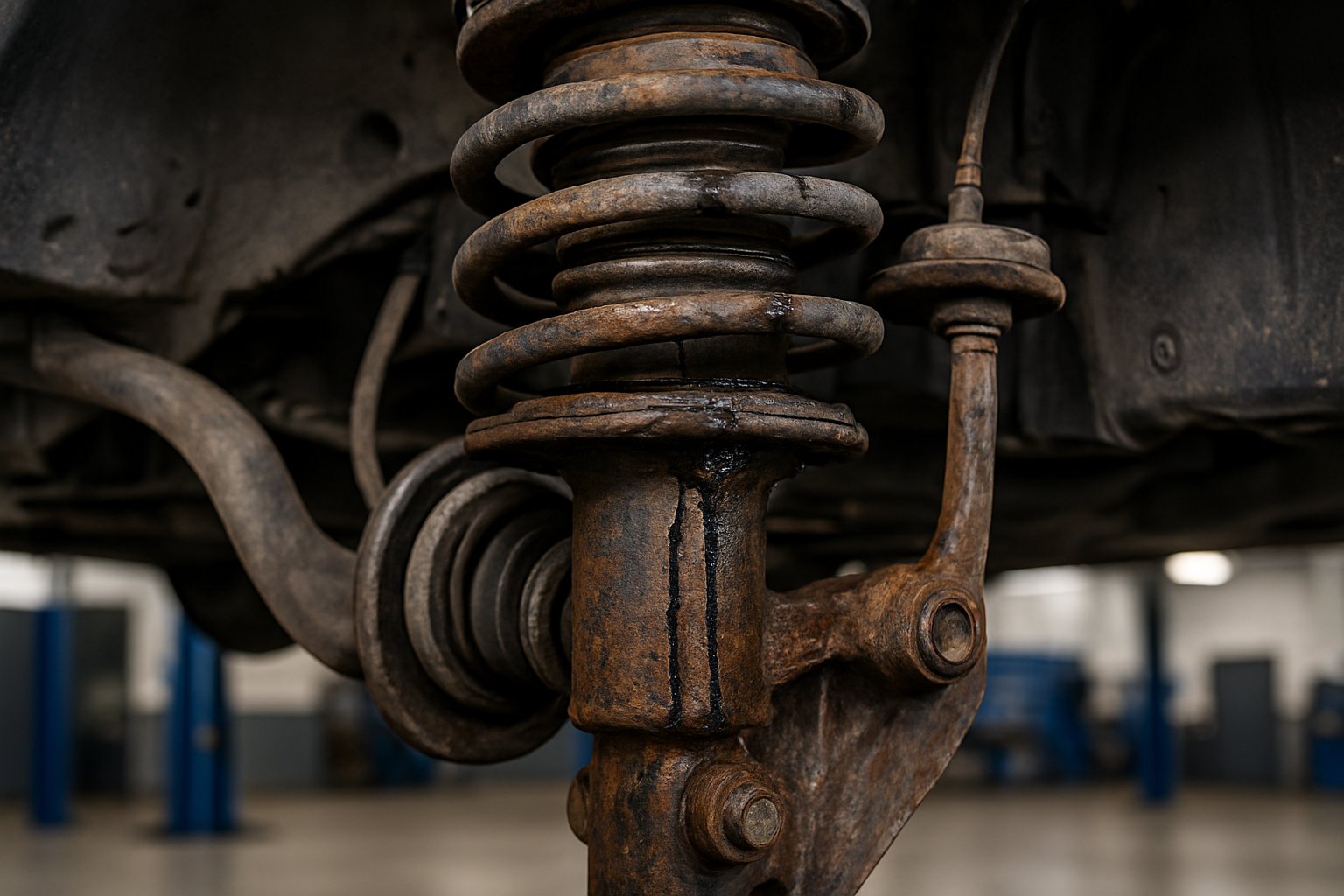
The most common signs of worn struts? Excessive bouncing after hitting bumps, uneven tire wear, poor steering control, and weird noises over rough roads.
I’ve seen too many drivers miss these early warnings and end up with bigger headaches later.
Let’s talk about how to spot worn struts before things get dangerous. Knowing what to look for can save you both money and stress down the road.
What Are Struts?
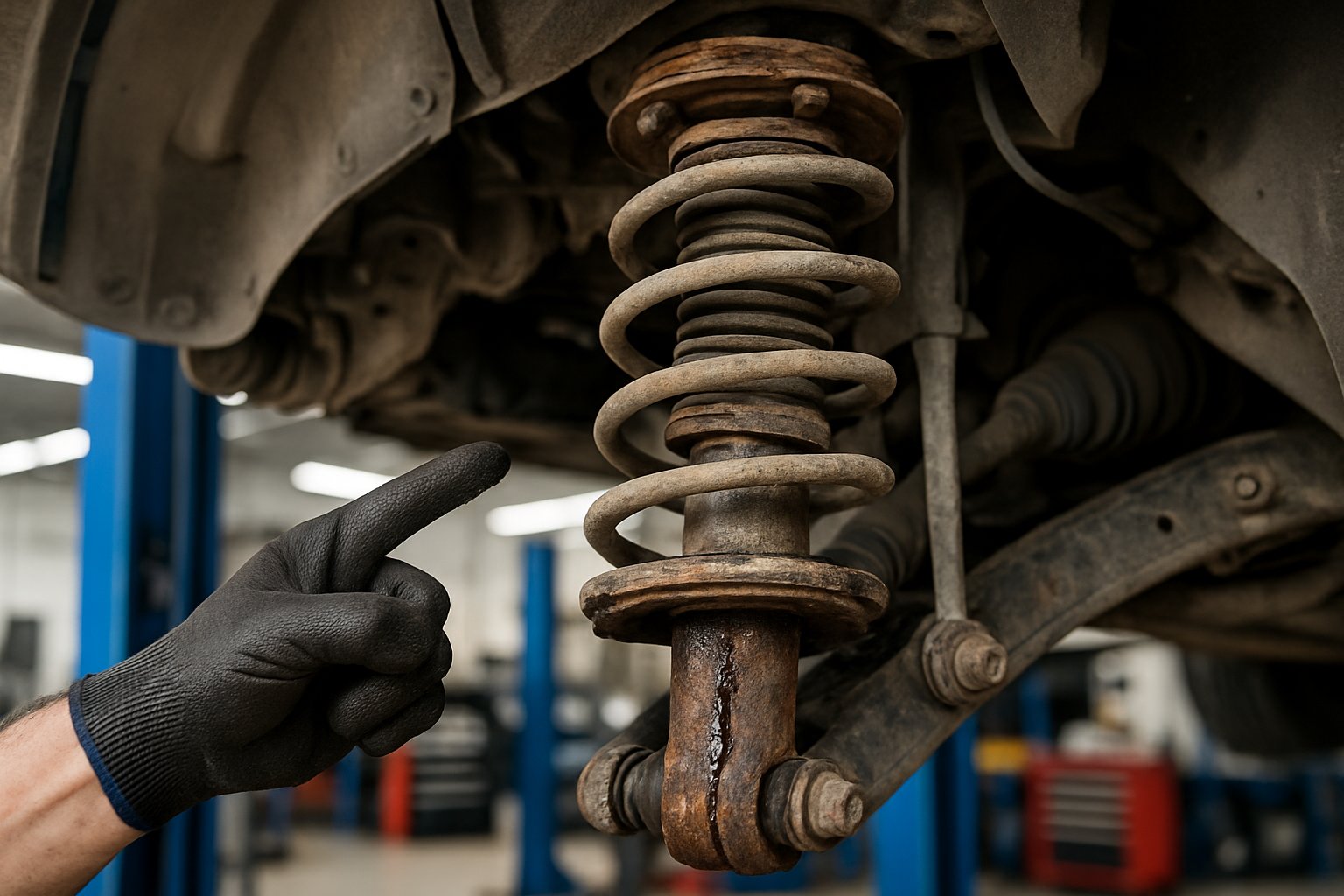
Struts are shock-absorbing parts that help support your car’s weight. They also control how your wheels and springs move.
Unlike regular shocks, struts combine several functions in one piece and mount in specific spots on your car’s suspension.
Purpose of Struts in a Vehicle
Struts do a few big jobs in your suspension. First, they absorb bumps and vibrations so your ride isn’t a teeth-chattering mess.
Weight Support: Struts work with springs to hold up the car and keep it at the right height. They’re sort of like the backbone of the suspension.
Motion Control: They control how your wheels move up and down, stopping your car from bouncing around like a trampoline after you hit a pothole.
Steering Support: Struts help keep your wheels pointing the right way. This means better steering and a more stable car.
The strut assembly is made up of a shock absorber, coil spring, and some mounting hardware. All those parts work together as a team, making struts more complicated than plain old shocks.
Difference Between Struts and Shocks
Struts and shocks both keep your car from bouncing too much, but they’re not the same thing. Struts are structural parts that actually hold up the car. Shocks just dampen motion—they don’t carry weight.
| Feature | Struts | Shocks |
|---|---|---|
| Weight Support | Yes | No |
| Steering Connection | Direct | Indirect |
| Spring Integration | Built-in or attached | Separate |
| Cost to Replace | Higher | Lower |
Struts connect right to your steering system. When I turn the wheel, the struts help direct the wheels. Shocks don’t do that.
Most cars have struts in the front and shocks in the back, but some have struts all around. It depends on your car’s design.
Location of Struts in Suspension Systems
Struts usually mount in the front suspension. They sit between the wheel hub and the car’s body, with the top connecting to the strut tower under the hood.
Front Struts: These are the most common and replace both shocks and upper control arms. They mount vertically and connect to the steering knuckle.
Rear Struts: Some cars use struts in the back instead of shocks. They work the same way but don’t connect to the steering.
The strut assembly bolts to specific spots. At the top, it connects to the strut tower; at the bottom, it bolts to the wheel hub or steering knuckle.
If you pop the hood, you can usually spot the tops of the front struts. The strut towers look like round, dome-shaped areas by the front wheels.
Common Signs of Worn Struts
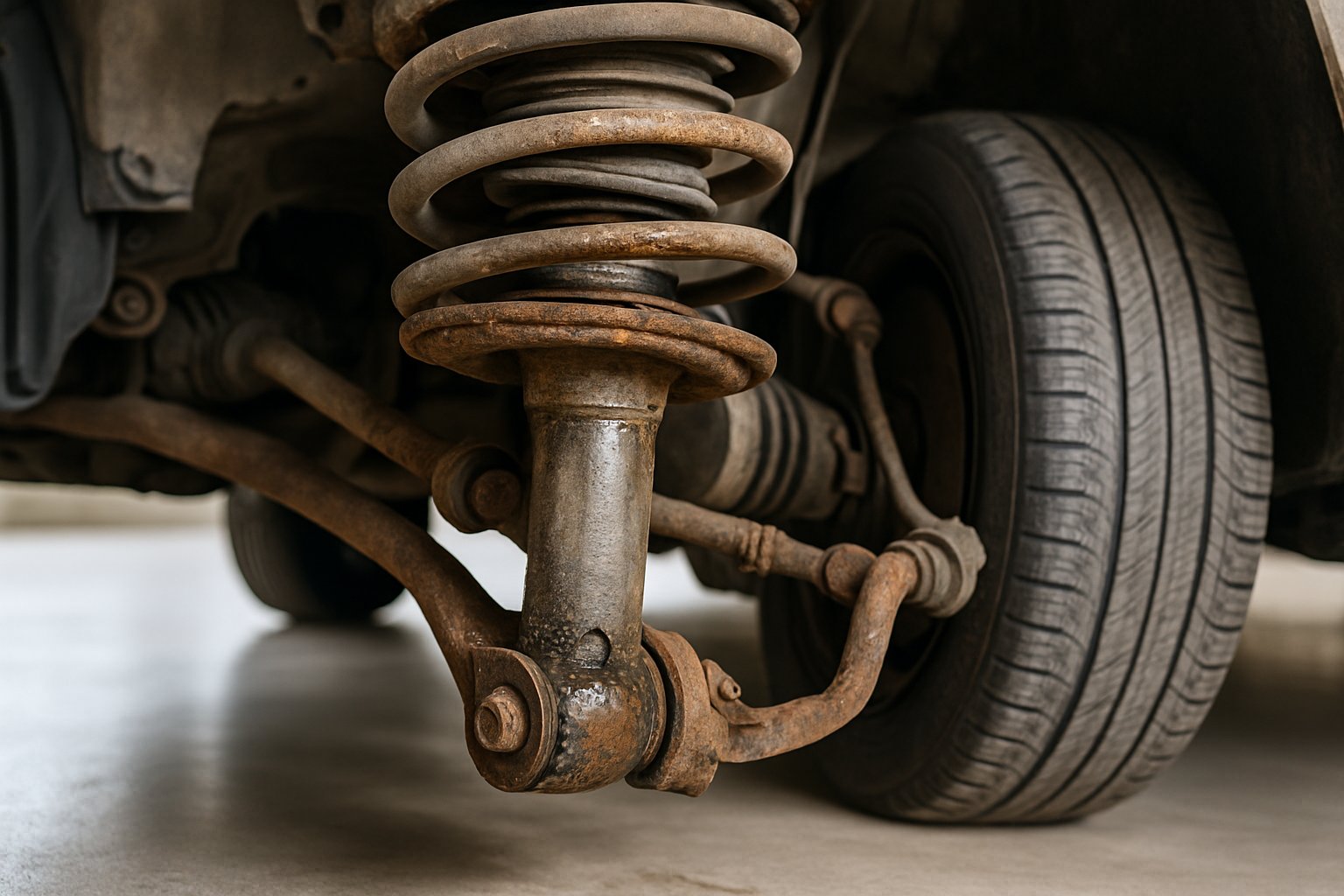
Worn struts show up in how your car drives and stops. Excessive bouncing, longer stopping distances, and uneven tire wear are the big giveaways.
Excessive Bouncing When Driving
When I hit bumps or dips, worn struts make my car bounce way more than it should. Good struts keep things steady.
Try this: push down hard on your car’s hood or trunk. If it bounces more than once or twice before settling, your struts are probably shot.
The bouncing gets worse over:
- Speed bumps
- Potholes
- Railroad crossings
- Uneven pavement
Sometimes, my car feels wobbly even on normal roads. It might sway or rock when turning corners or changing lanes. Worn struts just can’t keep the tires glued to the road.
Increased Stopping Distances
Bad struts make my car take longer to stop. They can’t keep the tires pressed down with enough force.
When I brake hard, the front end dips more than usual. This shifts weight off the rear tires, and the front tires might lose grip as the car bounces.
Here are some braking issues I notice:
- Car takes longer to stop
- Brake pedal feels mushy
- Car rocks back and forth after stopping
- Skids more easily on wet roads
Honestly, this is a real safety risk. Stopping distance can jump by 10 feet or more at highway speeds with worn struts.
Uneven Tire Wear
Worn struts show up in weird tire wear patterns. They put uneven pressure on different parts of the tire.
Look for these patterns:
- Cupping or scalloping – Small dips around the tire edge
- Flat spots – Smooth areas where the tread is worn down
- Inside or outside edge wear – One side is more worn than the other
Cupping is the one I see most. Run your hand around the tire—it’ll feel bumpy, not smooth. That’s from the tires bouncing and skipping on the road.
Check all four tires regularly. Uneven wear means you’ll be buying new tires sooner and losing grip, especially in rain or snow.
Visual and Physical Indicators
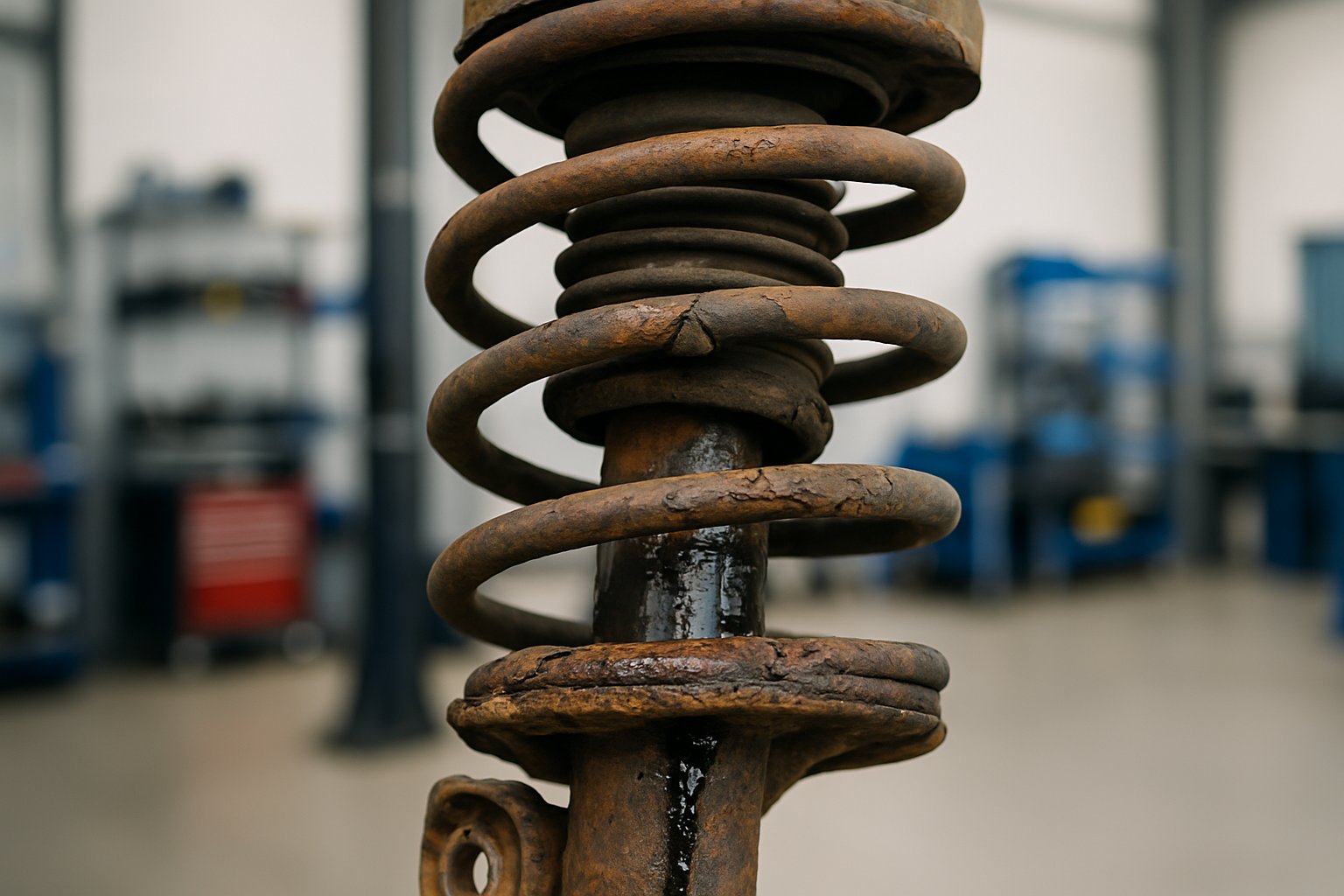
You can spot bad struts by looking for fluid leaks and checking if your car sits lower than usual. Odd noises like rattling or knocking can also mean trouble.
Leaking Fluid on Struts
Hydraulic fluid leaks are a dead giveaway. Look for wet spots or stains around the strut body and mounting points.
Fresh leaks show up as dark, oily patches on the strut tube. Older leaks leave dried, crusty gunk mixed with dirt.
The fluid leaks from the seals inside the strut. Once those seals go, the strut can’t control bouncing anymore.
I check both front struts by peeking behind each front wheel. The strut assembly sits right between the wheel and the car body.
Even small leaks mean the strut’s on its way out. A leaking strut just can’t do its job.
Sagging or Lowered Suspension
Worn struts can make one corner or side of the car sit lower. I measure from the ground to the wheel well on each side.
The difference shouldn’t be more than half an inch. More than that? Time to check those struts.
Sometimes, I just step back and eyeball the car. Sagging is pretty obvious if you look at the front versus the back, or left to right.
The car might lean when parked on flat ground. Weak struts can’t hold up the weight like they’re supposed to.
If you hear or feel the suspension “bottom out” over small bumps, that’s another sign the struts are done.
Rattling or Knocking Noises
Metal-on-metal sounds from the suspension are a red flag. Listen for them when driving over bumps or rough roads.
These noises come from loose or broken parts inside the strut. Worn bushings and mounting hardware can add to the racket.
Knocking is most common during turns or over speed bumps. The noise usually comes from the strut tower near each wheel.
Try bouncing each corner of the car while parked. Push down on the bumper and listen for rattles.
The sounds get louder as the damage gets worse. What starts as a little rattle can turn into a serious clunk.
Handling and Ride Quality Issues
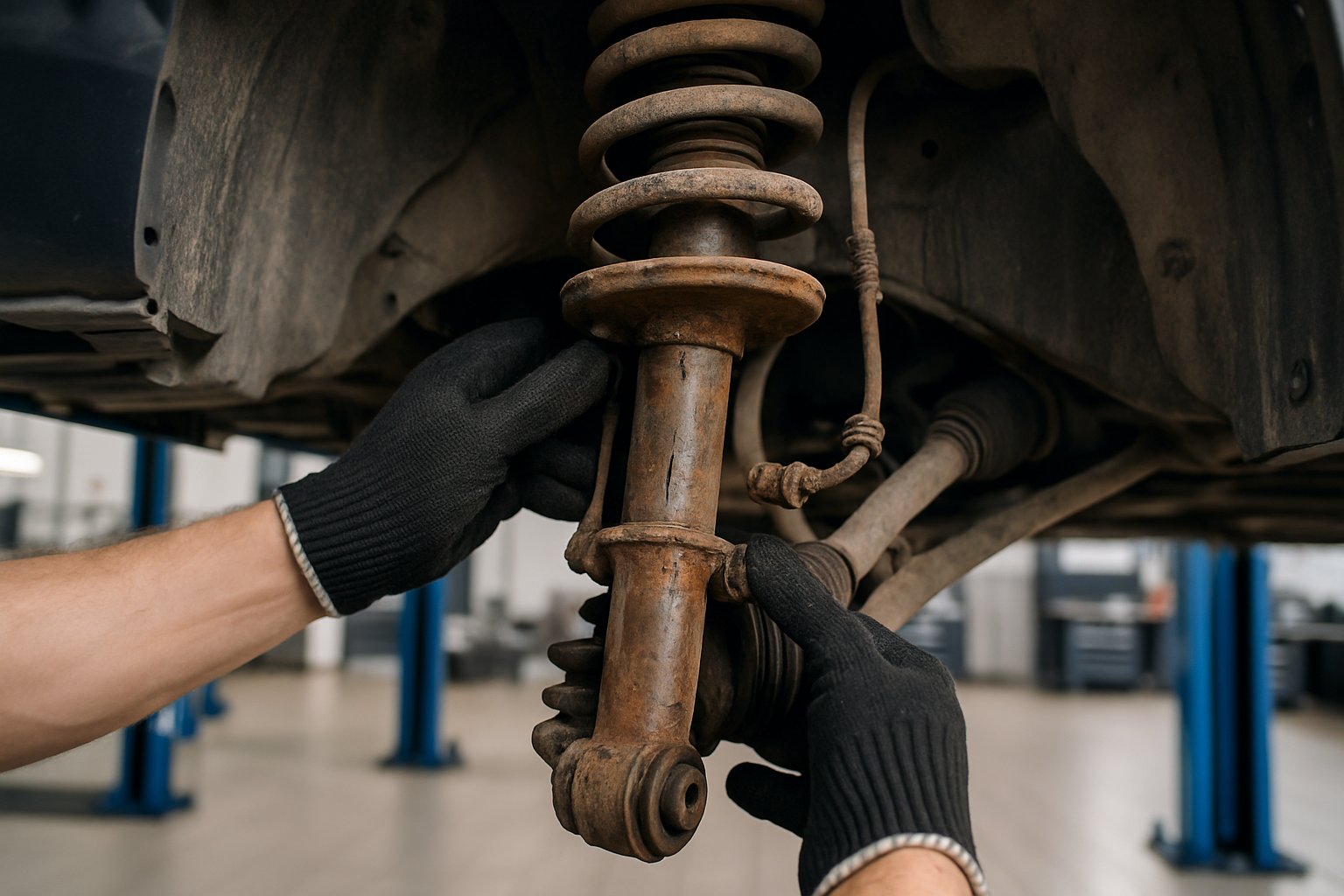
Worn struts really mess with how your car feels on the road. You might notice poor steering, too much body movement in turns, or just a general sense that the car isn’t as stable as it used to be.
Poor Steering Response
When struts wear out, steering gets less sharp. Sometimes it feels like the car’s floating or not quite connected to the road.
You might feel like you’re constantly correcting the wheel just to keep straight. The car can wander or drift, even on a straight road.
Common steering issues:
- Delayed response when turning
- Steering feels vague or loose
- The car pulls to one side
- Constant corrections needed
These problems show up because worn struts can’t keep the wheels planted. The tires start bouncing and moving on their own.
Body Roll When Turning
Too much body roll is a classic sign of bad struts. The car leans heavily when you turn or change lanes.
Every car has some body roll, but with worn struts, it feels like the car might tip over. It’s not fun, honestly.
I can feel the car rolling outward in corners. Passengers usually notice the swaying, too.
What to watch for:
- The car leans a lot in turns
- Takes longer to settle after a turn
- Feels unstable when changing lanes quickly
- Uncomfortable swaying feeling
Instability on Rough Roads
Worn struts make driving on bumpy or uneven roads really uncomfortable—and honestly, it feels pretty unsafe. The car just bounces around, and you can lose that sense of control fast.
I notice the vehicle keeps bouncing long after hitting a bump. Good struts should absorb the blow and help the car settle down quickly.
Sometimes, on rough roads, the car almost feels like it’s floating or barely touching the pavement. That makes steering unpredictable and, well, a little scary.
Excessive bouncing also messes with braking distance and overall control. Your tires just aren’t gripping the road as much as they should.
Safety Risks of Ignoring Worn Struts
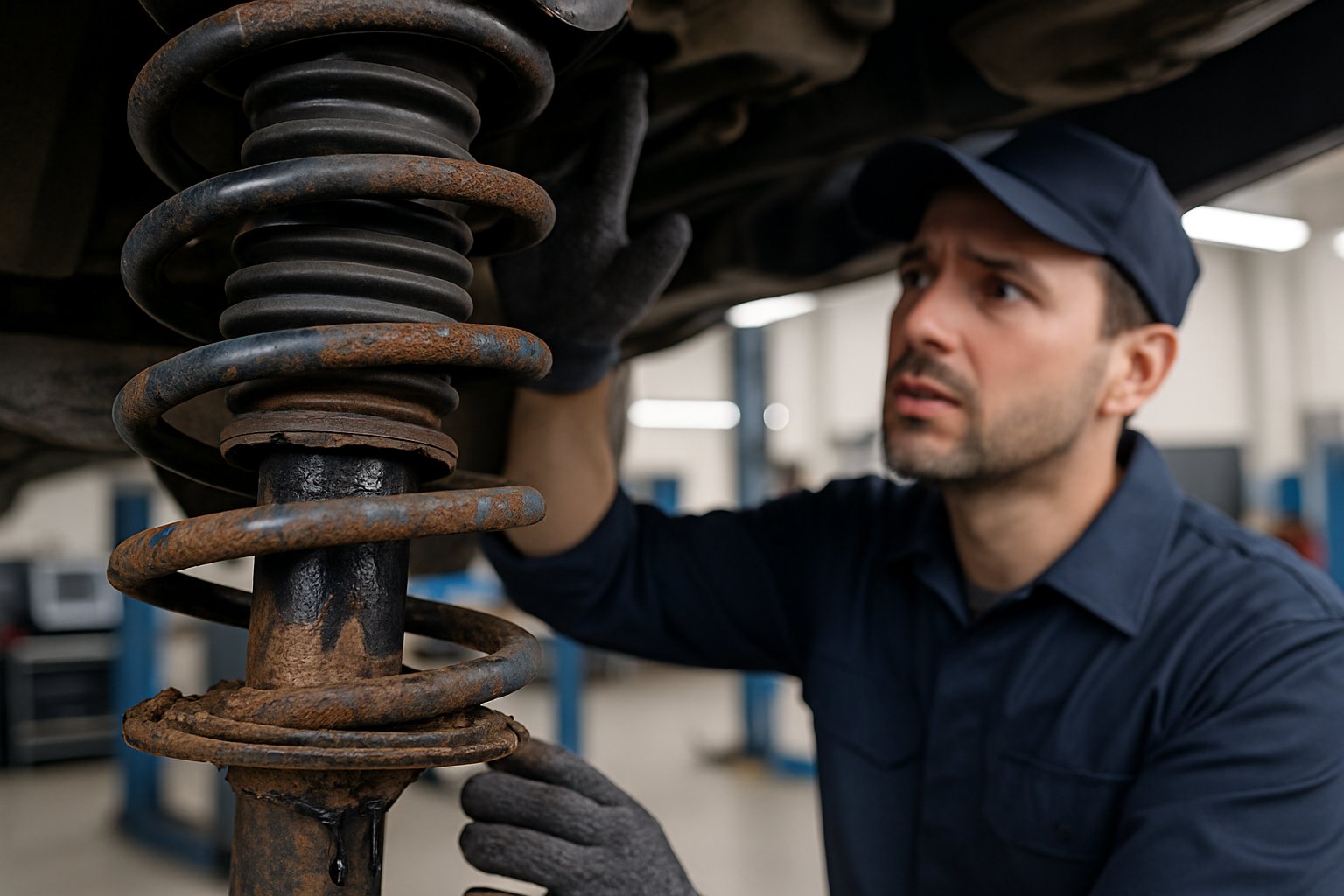
When struts fail, your car gets way harder to control, and stopping takes longer. These problems put you and everyone else on the road at risk.
Decreased Vehicle Control
Worn struts make your car bounce and sway more than it should. This extra movement makes it tough to keep your vehicle in its lane, especially on rough roads or during quick maneuvers.
Your steering feels less responsive when struts go bad. Sometimes the car feels loose or wobbly when you turn, which isn’t exactly confidence-inspiring if you need to react fast.
Key control problems include:
- Vehicle drifting or pulling to one side
- Excessive swaying during turns
- Loss of stability in crosswinds
- Difficulty maintaining straight-line driving
Bouncing also affects how your tires grip the road. Less grip means less traction for steering and accelerating, which is especially sketchy in rain or snow.
Compromised Braking Performance
Bad struts increase your stopping distance by several feet. When you brake hard, worn struts let the car’s weight shift forward too much, and that reduces rear tire grip.
All that bouncing can mess with your anti-lock brakes, too. ABS needs steady tire contact to work right, but worn struts interrupt that, and your brakes just aren’t as effective.
Braking issues you may notice:
- The car nose-dives when stopping
- Longer distances are needed to stop completely
- The vehicle continues bouncing after braking
- Uneven brake pad wear
Emergency stops get a lot riskier with worn struts. That extra stopping distance could be the difference between a close call and an accident.
Causes and Prevention of Strut Wear
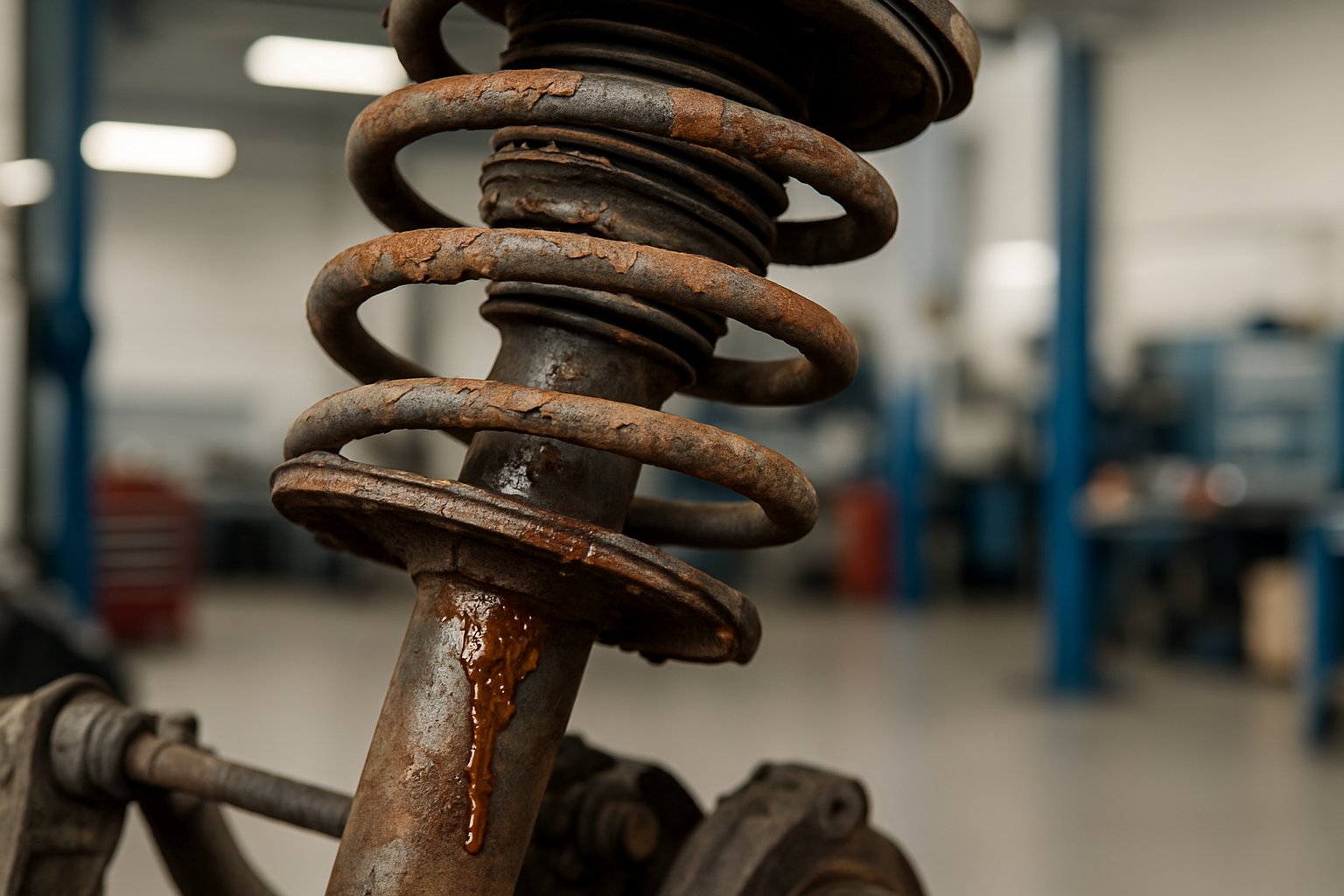
Struts wear out from daily driving and, honestly, from skipping regular care. Let’s look at what really speeds up strut damage and how a little attention can help them last longer.
Environmental Factors Affecting Struts
Road conditions are the biggest culprit. Potholes, speed bumps, and rough pavement all hammer away at your struts over time.
Salt from winter roads causes corrosion on metal parts. That weakens the strut housing and can make it fail earlier than you’d expect.
Temperature extremes affect strut performance:
- Cold weather makes rubber seals brittle
- Hot weather breaks down hydraulic fluid faster
- Repeated heating and cooling cycles cause metal fatigue
Driving style matters, too. Hard braking puts extra strain on struts. Taking corners fast or blasting over bumps just wears them out quicker.
I’ve noticed more strut problems in places with rough winters or crummy roads. Cars that stick to smooth highways seem to avoid a lot of these headaches.
Routine Maintenance Recommendations
Regular inspections catch strut problems before they get out of hand. I recommend checking the struts every 12,000 miles or just during oil changes if you want to keep it simple.
Key maintenance steps:
- Visual inspection – Check for fluid leaks or torn rubber boots
- Bounce test – Push down on each corner and see how many times it bounces
- Tire checks – Look for uneven wear that might mean strut trouble
Always replace struts in pairs for balanced handling. Mixing new and old ones just leads to weird performance issues.
Keep tires inflated and aligned. Wrong tire pressure or bad alignment makes struts work overtime.
And if you can, slow down for bumps and potholes. A little caution goes a long way for your struts.
When and How to Replace Struts
Most struts need replacing somewhere between 50,000 and 100,000 miles, but it really depends on your driving. Honestly, I’d leave strut replacement to a pro—there are special tools, and it can get risky.
Recommended Replacement Intervals
Mileage-based replacement is the usual rule of thumb. Most automakers say to swap out struts every 50,000 to 100,000 miles.
In my experience, driving conditions make a huge difference. City driving with lots of stops and starts wears out struts way faster than highway cruising.
Harsh conditions mean more frequent replacements:
- Rough or unpaved roads
- Heavy loads or towing
- Extreme temperatures
- Frequent potholes or speed bumps
I always swap struts in pairs. If one front strut goes, both get changed—keeps everything balanced and avoids weird handling.
Some signs matter more than mileage: Oil leaking from struts, excessive bouncing, or just lousy handling. I don’t wait for a mileage milestone if these show up—it’s time to replace them.
Professional Versus DIY Replacement
Professional replacement is what I’d recommend for most car owners. Strut replacement involves compressed springs, and honestly, those things can be dangerous if you’re not careful.
Professional mechanics have specialized tools like spring compressors and hydraulic lifts. These tools aren’t cheap, and you need training just to use them safely.
Labor costs usually fall between $300 and $700 per pair, depending on your vehicle. That price covers things like proper disposal of old parts and a warranty, which is always nice to have.
DIY replacement is possible, but really only if you’re experienced and have the right gear. If you’re thinking about it, make sure you’ve got:
- Spring compression tools
- Proper jack stands
- Torque wrenches
- Some real experience with suspension work
The safety risks are no joke. Compressed springs can cause severe injuries—one slip and you could be looking at serious damage or personal harm.
2 thoughts on “Signs of Worn Struts: Key Warning Indicators Every Driver Should Know”
Comments are closed.