
Your car’s cabin air filter keeps the air inside your vehicle cleaner and fresher. It’s a small part, but it works hard to catch dust, pollen, pollution, and other stuff before it gets inside through the heating and AC system.
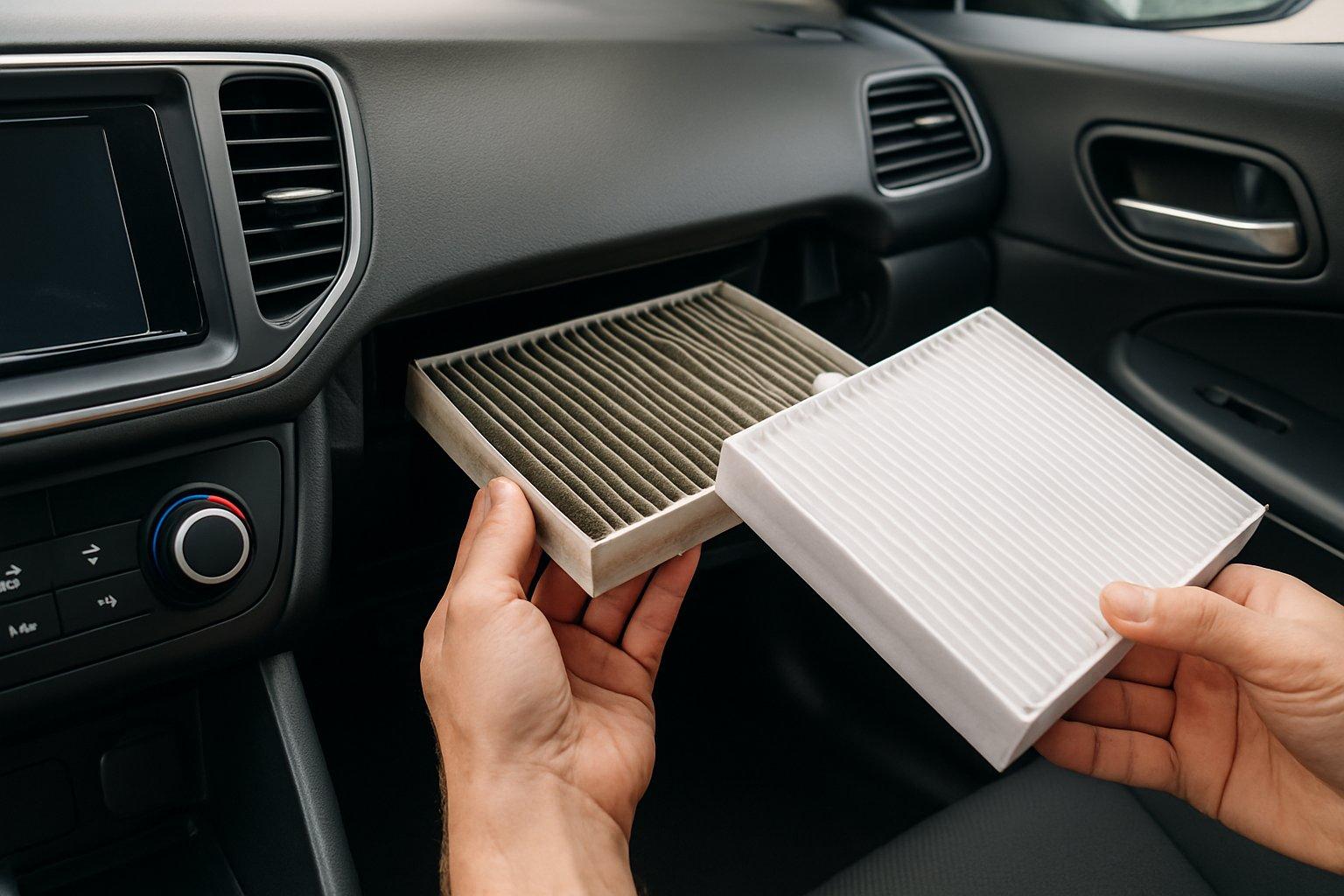
Most manufacturers recommend replacing your cabin air filter every 12,000 to 15,000 miles or once a year, whichever comes first. But honestly, this isn’t a one-size-fits-all situation. If you’re always driving through dusty roads, stuck in city traffic, or living somewhere with a lot of pollution, you’ll probably need to swap your filter more often than that.
Let’s talk about how you can tell when it’s time for a new filter, what changes the schedule, and why skipping this job can come back to bite you.
Recommended Replacement Intervals
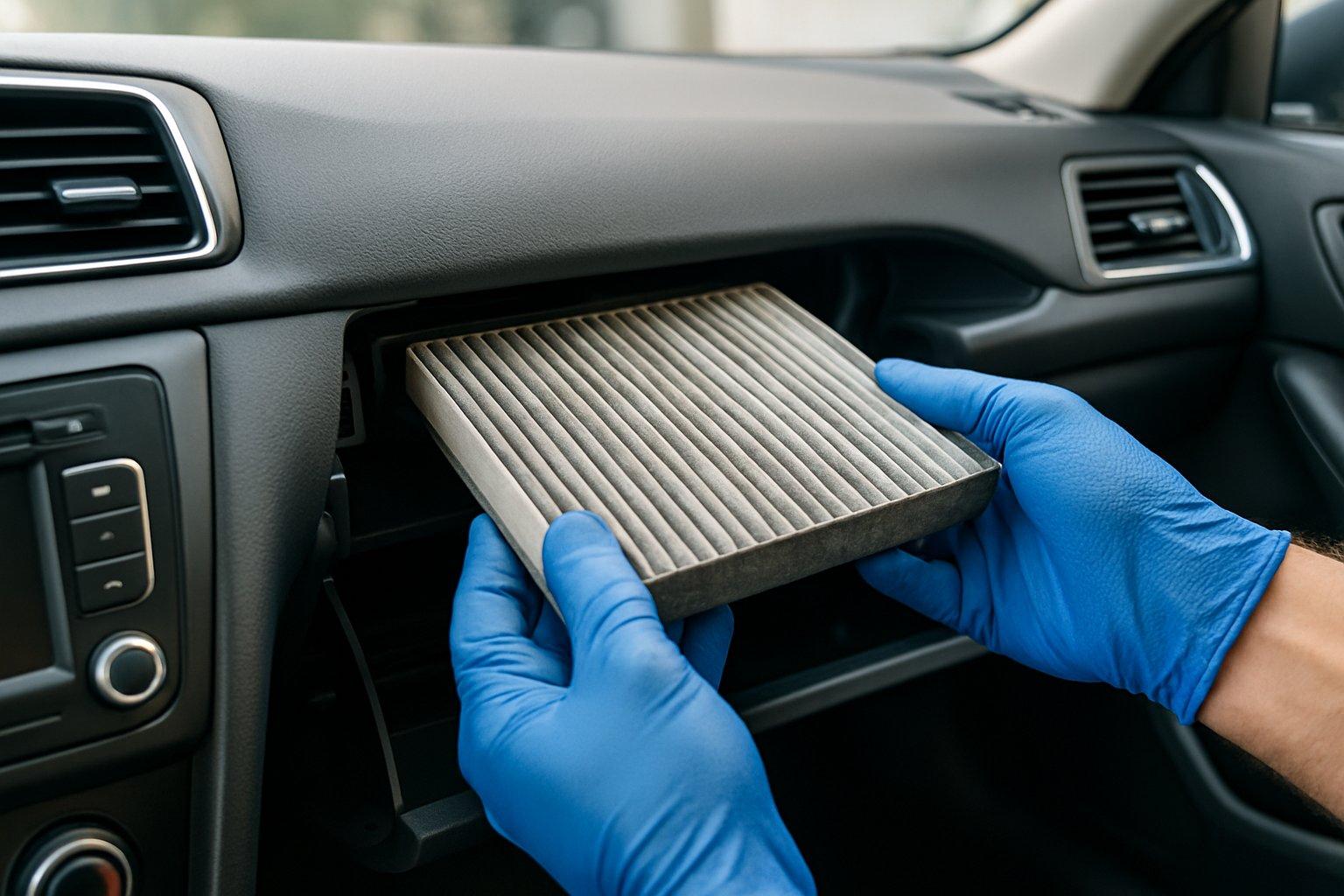
Most car makers suggest swapping out your cabin air filter every 12,000 to 30,000 miles or once per year. It really depends on your car and how you use it.
Manufacturer Guidelines
First thing—check your owner’s manual for the official word on timing. Most manufacturers recommend intervals from 15,000 to 30,000 miles or every 1 to 2 years.
Some brands, especially luxury ones, might want you to change it more often because their filters are finer. Your manual will also tell you the exact filter you need, so you don’t end up buying the wrong one.
Lost your manual? Just call your dealer or poke around on the manufacturer’s website. They’ll have the specs for your car’s year and model.
Mileage-Based Recommendations
Experts usually say 12,000 to 15,000 miles is a good rule of thumb. That’s for average driving—nothing too extreme.
If you’re racking up miles fast, stick to that schedule. Over 15,000 miles a year? Check your filter every 12 months, minimum.
City traffic is rough on filters. All that stopping and starting means more fumes and junk in the air. On the highway, you might be able to stretch it a bit since the air’s cleaner and you’re not stopping all the time.
Honestly, I just set a reminder and do it with my oil change. Makes life simpler.
Time-Based Recommendations
Swapping your filter once a year is common, even if you barely drive. It’s an easy way to keep things fresh.
Seasons matter too. I like to change mine before summer since the AC gets a workout. If you live somewhere hot or humid, your filter might not last as long.
Allergy season is brutal for filters. If you get sniffly in spring or fall, change it before pollen season kicks off. Even if you barely drive, dust and smells still build up. Yearly replacement just keeps things simple.
Signs Your Cabin Air Filter Needs Replacement
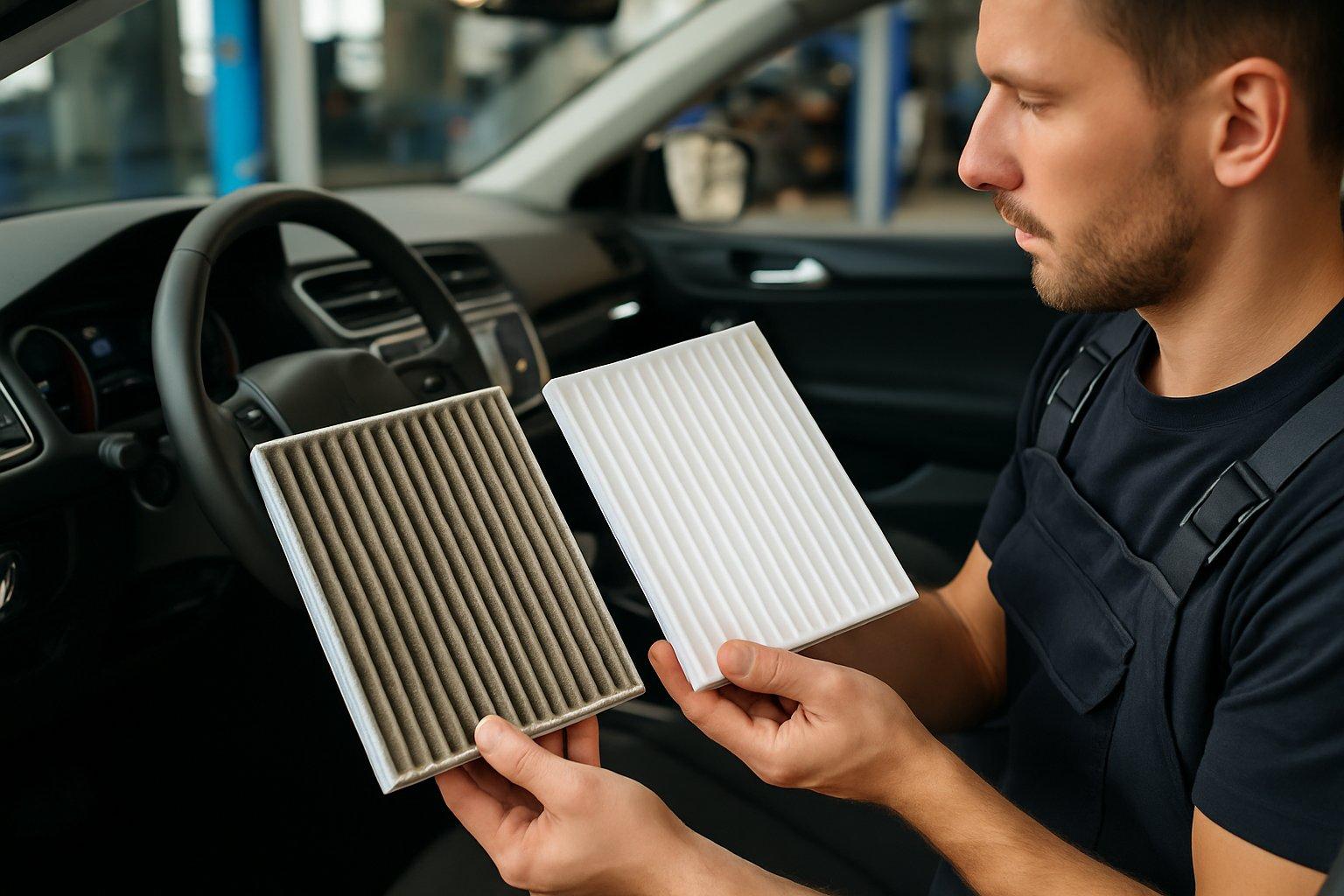
A dirty cabin air filter doesn’t hide for long. You’ll feel weaker airflow from the vents, maybe catch a weird smell when you crank the heat or AC, or just notice more dust floating around.
Reduced Airflow
The first thing I look for is weak air coming from the vents. If I blast the fan and still barely feel anything, that’s a red flag.
Clogged filters choke off the air. It’s especially obvious on the highest setting. If the air feels weak even then, it’s probably time for a new filter.
It doesn’t get better on its own. Weak airflow just gets worse. Your HVAC system ends up working overtime, and that’s not good for it either.
What to watch for:
- Weak air from vents, even on high
- Takes forever to heat or cool the car
- Some vents barely blow at all
- Fan sounds like it’s straining
Unpleasant Odors
Smells are another giveaway. If you get a musty, stale, or even sour whiff when you start the car or turn on the vents, that’s usually your filter talking.
Dirty filters trap moisture and gunk, which is perfect for mold and bacteria. That’s where those nasty smells come from.
It’s usually worst when you first start up. The stink might fade after a few minutes, but it’ll keep coming back. Weird odors? Time for a swap.
Common smells:
- Musty or moldy – probably mold or bacteria
- Stale or dusty – your filter’s full of junk
- Exhaust fumes – filter isn’t catching outside pollution
Increased Allergens
If I start sneezing, coughing, or get itchy eyes while driving, I check my cabin filter. Once it’s clogged, it can’t trap pollen, dust, or other allergens anymore.
Instead of blocking this stuff, a dirty filter might actually blow it into the cabin. You end up breathing it all in, especially during allergy season.
People with asthma or allergies will notice first, but even if you don’t, you might see:
- More sneezing or coughing in the car
- Itchy or watery eyes
- Scratchy throat from dust
- Extra dust on the dash
Factors Affecting Replacement Frequency
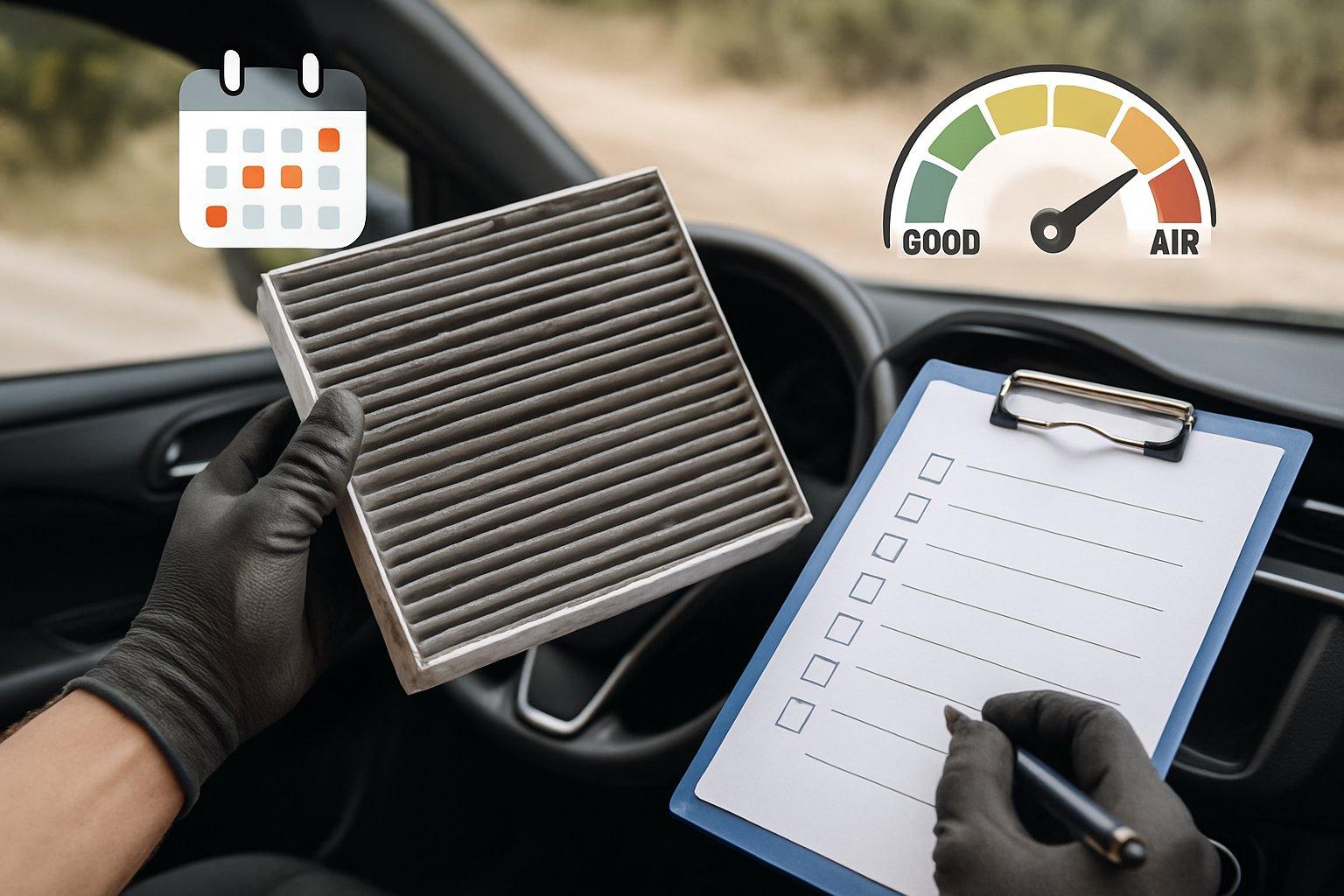
How long your cabin air filter lasts depends on where you drive, the weather, and how much you’re in your car. Sometimes filters wear out way faster than the manual says, sometimes they last longer.
Driving Environment
I’ve noticed that the driving environment makes a huge difference. If you’re always in heavy city traffic, your filter gets loaded with exhaust and grime.
Places that wear out filters fast:
- Downtowns with lots of cars
- Industrial areas with factories
- Construction zones are full of dust
If you’re out in the country, dust from dirt roads can clog your filter even quicker than city driving. I check mine every 10,000 miles if I’m driving on dusty roads a lot. If you stick to clean highways, you can probably wait a bit longer.
Pollen is another problem. Driving through heavy pollen in spring can turn your filter yellow in no time. It’s wild how fast it builds up.
Climate Conditions
Weather’s a big factor too. Hot, dry places have more dust and sand in the air. That stuff clogs up filters fast.
Desert and dry areas are rough:
- Dust storms
- Sand everywhere
- Low humidity keeps particles floating
Humid places have their own issues. Moisture makes filters a breeding ground for mold. I’ve smelled that mustiness way faster in coastal towns.
Seasons matter:
- Winter road salt gets in the air
- Falling leaves break down and clog things up
- Summer heat means more tire particles on the road
I sometimes check local air quality reports to guess when my filter might need help. Bad air days really do take a toll.
Cold weather isn’t a break either. Running the heat a lot means your filter’s always working.
Vehicle Usage Patterns
How much and how often you drive changes everything. Daily commuters burn through filters faster than weekend drivers.
If you drive a lot, change more often:
- 20,000+ miles/year: every 10,000-12,000 miles
- 10,000-20,000 miles/year: every 12,000-15,000 miles
- Under 10,000 miles/year: every 15,000-20,000 miles
Stop-and-go driving is rougher than cruising on the highway. Sitting at red lights or in parking lots means your system’s sucking in more junk.
How you use the climate control matters too. Recirculate mode is easier on the filter, but if you always pull in fresh air, it’ll get dirty faster.
Ride-share and delivery drivers really chew through filters. They usually need a new one every 8,000-10,000 miles since their cars never get a break.
Lots of short trips? The engine doesn’t get hot enough to dry things out, so you get more moisture in the system. That means more work for your cabin filter.
Consequences of Neglecting Cabin Air Filter Replacement
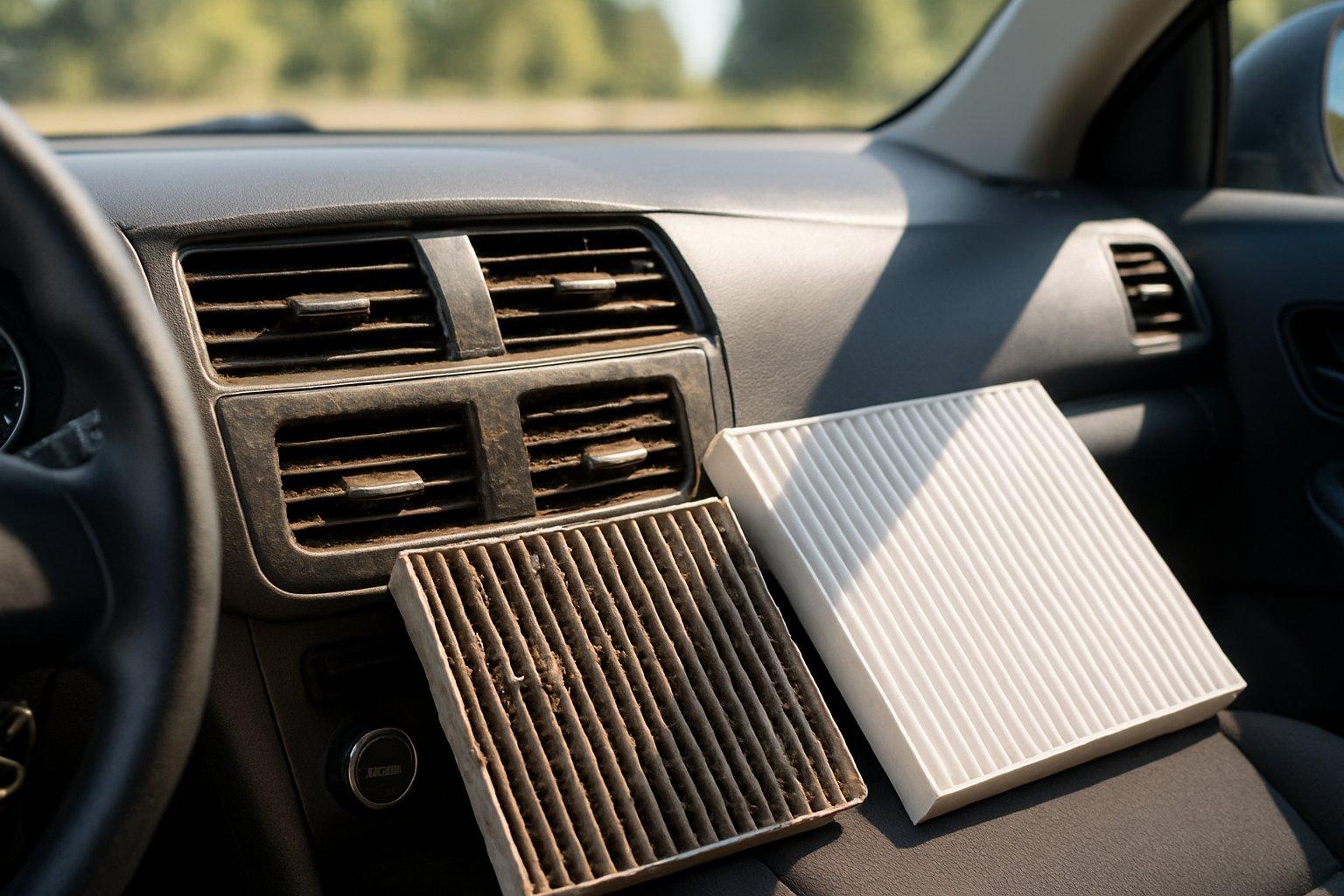
If I skip changing my cabin air filter, it’s not just a comfort thing—it can mess with my health and even my car’s performance. A clogged filter means worse air inside and makes the HVAC system work overtime, which isn’t great for anyone.
Impact on Air Quality
Neglecting to replace the cabin air filter leads to poor air quality inside my car.
The filter just stops trapping dust, pollen, and other bits effectively. Dirty air starts flowing into my cabin, and I end up breathing in more allergens and pollutants every time I drive.
The filter gets so clogged that it can’t catch new stuff. Instead of clean air, I get:
- Dust particles that settle on surfaces
- Pollen that triggers allergies
- Exhaust fumes from other vehicles
- Debris from the road
My car’s interior gets dusty faster. The dashboard and seats collect more gunk because the filter just isn’t doing its job anymore.
Effect on HVAC System Performance
A clogged filter restricts airflow and reduces HVAC system efficiency. My heating and cooling system has to work way harder to push air through a blocked filter.
Sometimes I notice weaker airflow from my vents. The air conditioning doesn’t cool my car as well in summer, and the heater struggles to warm the cabin in winter.
Blasting air through a clogged filter is much more difficult than pushing it through a clean one. This extra strain can lead to expensive problems:
| Component | Potential Issue |
|---|---|
| Blower motor | Burns out from overwork |
| HVAC fan | Fails from increased resistance |
| System seals | Crack from pressure buildup |
My fuel economy might drop because the system uses more energy to operate. It’s a little frustrating when you realize your car’s working overtime just because of a forgotten filter.
Potential Health Implications
Poor cabin air quality can really mess with my health and my passengers’ well-being. A dirty cabin air filter impacts both comfort and health.
I might start sneezing more, get itchy eyes, or feel congested while driving. People with asthma have it worse—polluted air can trigger breathing problems or even asthma attacks.
Common health effects include:
- Headaches from poor air circulation
- Fatigue from breathing contaminated air
- Respiratory irritation
- Worsened seasonal allergies
My family members who are sensitive to allergens suffer the most. Kids and elderly passengers are especially vulnerable to these air quality problems.
The confined space of my car just makes these issues worse. It’s not like I can open a window on the highway and expect miracles.
Best Practices for Cabin Air Filter Maintenance
Regular inspection helps catch problems early. Picking quality filters matters for performance, and honestly, knowing when to DIY or go to a shop makes life easier.
Inspection Tips
I check my cabin air filter every three months or just whenever I get my oil changed. The filter’s usually behind the glove box or under the dashboard, but it can vary by car.
Visual inspection signs I look for:
- Dark gray or black coloring
- Visible dirt and debris buildup
- Leaves, insects, or other foreign objects
- Tears or damage to the filter material
I try to remove the filter gently so I don’t shake debris into the air system. A clean filter looks white or light colored with barely any particles on it.
Performance indicators that tell me it’s time for a check: less air coming out of the vents, weird musty smells, or just more dust on the dashboard. A clogged cabin air filter reduces airflow, significantly impacting comfort.
I usually write the replacement date on the filter frame with a marker. That way, I don’t have to guess when I swapped it last time.
Choosing the Right Filter
I always double-check the part number before buying a replacement filter. My owner’s manual lists the specific filter type and size I need.
Filter types I consider:
- Particulate filters: Basic dust and pollen protection
- Activated carbon filters: Odor and gas filtration
- HEPA filters: Maximum particle removal efficiency
For city driving with heavy traffic and pollution, I lean toward activated carbon filters. If I’m mostly out in the country, a standard particulate filter is usually enough.
For me, quality indicators include a proper fit, solid construction, and a brand I actually recognize. I pass on filters that feel flimsy or don’t match the exact size.
Prices are all over the place, but I try to balance cost with what I need. Premium filters last longer and keep the air cleaner, so they’re worth it—especially if I’m in my car every day.
Professional Versus DIY Replacement
I can usually swap out most cabin air filters myself in about 10-15 minutes. All I need are some basic tools.
It often means taking out the glove box or fiddling with panels under the dash. Sometimes it’s trickier than it sounds, but usually not too bad.
DIY advantages:
- It’s cheaper since I’m not paying for labor.
- I can do it whenever I want—no waiting around.
- Honestly, it’s a good way to pick up a few car skills.
When I seek professional help:
- Some filters are buried deep and need part of the dashboard removed. No thanks.
- If my car’s under warranty, I get a bit nervous about messing something up.
- Sometimes I just don’t have the right tools or a decent place to work.
Whether I go DIY or let a pro handle it, I try to keep an eye on when the filter’s due. Fresh air inside the car just feels better.
With straightforward jobs, I’ll save the cash and do it myself. But with luxury cars or anything that looks complicated, it’s probably smarter to let an expert take over.
Tools I need for DIY:
- Screwdrivers (a set is handy)
- Work gloves—filters can get gross
- Some kind of light, like a flashlight or headlamp
I always take a look at the manual first. Every car’s a bit different, and it’s easy to miss a step if I don’t check.