
Ford’s set a troubling record this year that every car owner should have on their radar. Ford Motor Company has issued over 103 safety recalls in 2025, making it the most-recalled automaker of the year and impacting millions of vehicles on the road.
The numbers just keep climbing. Recent recalls in October alone added another 1.4 million vehicles to an already massive list.
I’ve been keeping an eye on Ford’s recall activity all year, and honestly, the scope is wild. These recalls touch everything from faulty rearview cameras to major safety defects across favorites like the F-Series Super Duty trucks and crossovers.
What’s especially worrying is that a lot of these aren’t just minor bugs—many involve crucial safety systems that could genuinely raise crash risks. If you drive a Ford, this isn’t just trivia; it’s about your safety and your family’s.
Let’s get into the major recalls, which models are in the hot seat, and, most importantly, what you should do next to stay safe and get those repairs handled.
Overview of Ford Vehicle Recalls 2025
Ford’s 2025 recall numbers are honestly off the charts. There have been more than 120 safety recalls so far, affecting millions of vehicles.
The company leads all automakers in recall frequency right now. Problems range from rearview cameras to steering glitches.
Key Statistics and Trends
Ford’s issued over 120 recalls this year. That’s more than any other automaker in 2025.
More than 7.8 million vehicles have been affected. That’s a staggering number, even for a giant like Ford.
Major recall categories include:
- Rearview camera malfunctions (1.1 million vehicles)
- Steering control problems (29,000+ vehicles)
- Brake system failures (2,345 vehicles)
The recall frequency is way up compared to previous years. Ford’s recall count beats its closest competitor by over 80 recalls.
Most of these recalls are for safety-critical stuff. Electronic components and software glitches top the list.
Comparison to Previous Years
2025 is a record-breaker for Ford. By September, they’d already blown past typical annual totals.
Stellantis is second with about 40 recalls. General Motors trails in third with only 20.
Recall comparison by manufacturer:
- Ford: 120+ recalls
- Stellantis: ~40 recalls
- General Motors: 20 recalls
The gap between Ford and everyone else is huge this year. It used to be more balanced among the big automakers, but not in 2025.
Affected Vehicle Types
Ford’s recalls hit a wide range of vehicles and model years. Both passenger and commercial vehicles are caught up in this mess.
Popular models like the F-150 and Explorer keep popping up in recall alerts. Even Lincoln and Mercury models aren’t immune.
Vehicle segments affected:
- Pickup trucks
- SUVs and crossovers
- Passenger cars
- Commercial vehicles
Both new 2025 models and older vehicles are on the list. Interestingly, 2025 model year vehicles make up a smaller chunk compared to previous years at this point.
Major Recalls Issued by Ford in 2025
Ford’s been hammered with over 120 recalls so far this year. The biggest recalls have hit popular models like the Mustang and Super Duty trucks—think safety issues, mechanical failures, and software bugs.
Safety-Related Recalls
Several major safety recalls have landed in 2025. One of the biggest: 332,778 Mustangs in cold-weather states got recalled for safety concerns.
The Lincoln Aviator recall tagged around 135,000 vehicles back in June. That one was also about safety risks for drivers and passengers.
Key Safety Recalls:
- Mustang recall: 332,778 vehicles
- Lincoln Aviator: 135,000 vehicles
- Various other models with safety defects
On average, Ford’s been issuing a recall every couple of days. Each one affects over 50,000 vehicles. Safety recalls make up a big chunk of Ford’s recall pile this year.
Mechanical Defect Recalls
Mechanical problems have triggered some of Ford’s largest recalls. The Super Duty truck recall alone affected nearly 292,000 vehicles.
These issues range from engine problems to transmission headaches. Both new and older models have been hit.
More than 4 million Ford vehicles have been affected by recalls this year. A lot of these are due to mechanical defects that could cause breakdowns or even safety hazards.
Software and Technology Recalls
Software bugs are a big headache for Ford in 2025. Modern vehicles rely on complex computer systems, and when those go wrong, it’s trouble.
Ram and Dodge from Stellantis also got caught up in a rear-view camera software recall—219,000 vehicles. Ford’s had similar problems in its own lineup.
Common Software Issues:
- Infotainment system glitches
- Camera software bugs
- Electronic control module failures
When software fails, it can mess with safety features or even make cars undrivable. Ford’s still working to patch these problems with recalls and updates.
Notable Ford Models Impacted by 2025 Recalls
Several of Ford’s best-sellers have been swept up in these recalls. The F-150, Explorer, and Mustang all landed on the list with safety issues needing repairs.
Ford F-150
The F-150’s been recalled multiple times this year. Owners had to bring their trucks in for free fixes.
Problems ranged from engine quirks to electrical bugs. Safety equipment failures were also a concern.
Key F-150 Recall Issues:
- Engine performance hiccups
- Electrical system faults
- Safety equipment malfunctions
Owners got recall notices in the mail. Ford covered repairs at authorized dealerships.
Both newer and older F-150s were affected. In my experience, Ford moved pretty fast to notify people and get repairs going.
Ford Explorer
The Explorer SUV also faced its share of 2025 recalls. Mechanical problems cropped up that could have put drivers and passengers at risk.
Ford found issues with the Explorer’s key systems. These had the potential to impact safety and performance.
Explorer Recall Categories:
- Brake system worries
- Suspension component faults
- Electronic control glitches
The recall spanned several model years. Ford sent out official notices with repair instructions.
Dealership techs got special training to handle the fixes. Repairs were free under the recall program.
Ford Mustang
The Mustang—both the classic and the Mach-E electric—showed up on Ford’s 2025 recall list. Each had its own set of issues.
Ford uncovered problems with the Mustang’s safety systems. They moved to fix these with official recalls.
Mustang Recall Problems:
- Airbag system glitches
- Battery issues (Mach-E)
- Steering component faults
The Mach-E had unique recall headaches, different from the gas Mustang. Ford rolled out specific repair plans for each version.
Owners could book appointments at dealerships to get things sorted out.
Causes Behind Ford’s 2025 Recalls
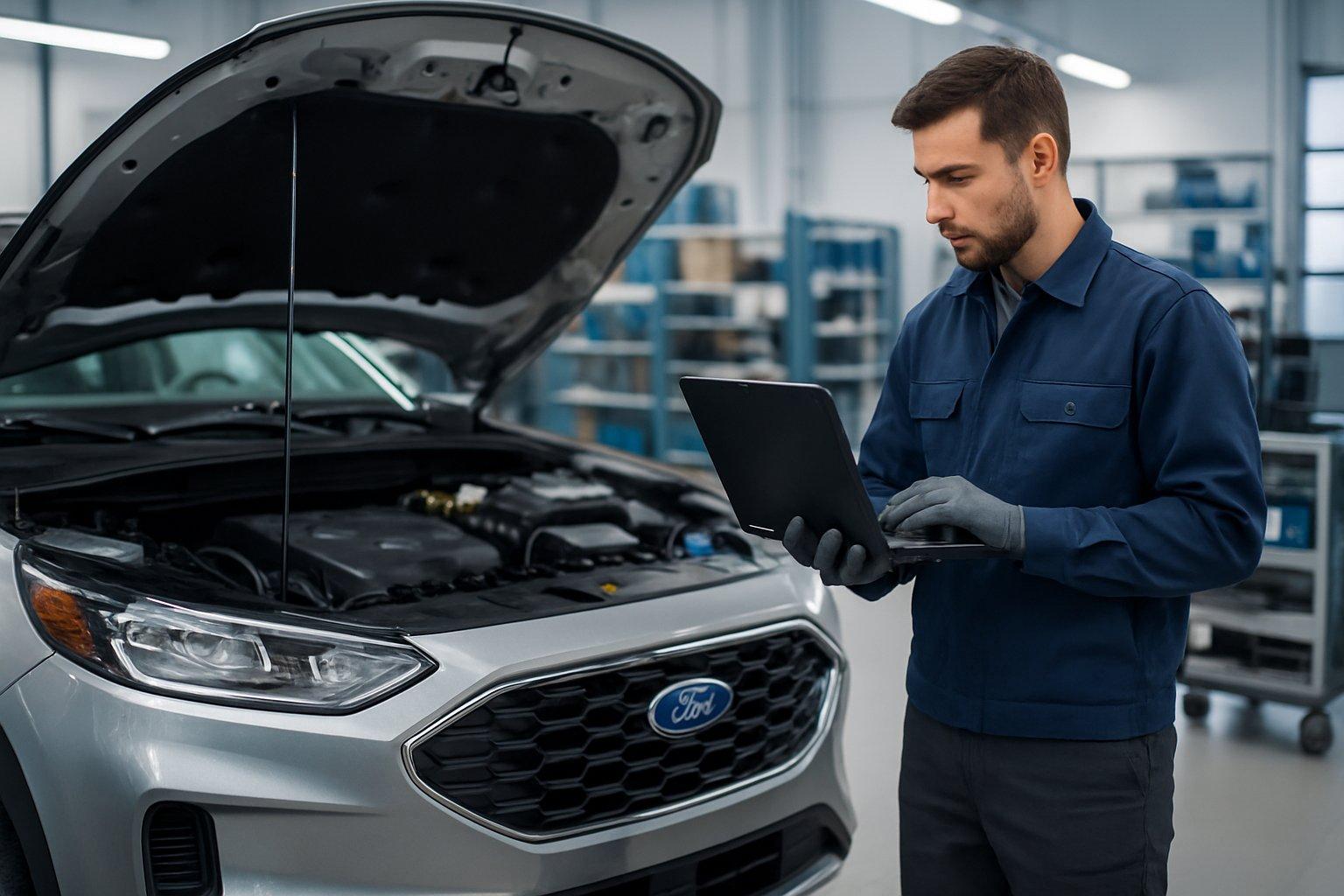
So, why all these recalls? It mostly comes down to three things: manufacturing mistakes, questionable design decisions, and bad parts from suppliers.
Manufacturing Defects
Assembly line problems have caused a lot of headaches. Poor quality control led to faulty rearview cameras in more than 1.1 million vehicles.
Sometimes, workers install parts wrong. That’s a risk that only shows up after people start driving cars.
Common manufacturing issues include:
- Improper wiring
- Wrong part installation
- Missing pieces during assembly
- Subpar welding or bonding
Ford’s factories have struggled to keep standards consistent. If workers miss a step, it can mean a recall down the line.
Machine breakdowns or calibration issues can also sneak through. Sometimes, hundreds or thousands of vehicles slip past before anyone notices.
Design Flaws
Some recalls are rooted in design problems. Engineers made choices that led to steering control issues for over 29,000 vehicles.
There have also been design flaws in braking systems. That’s led to recalls of more than 2,000 vehicles for potential brake failures.
Key design issues include:
- Buggy software programming
- Poor component layout
- Weak testing routines
- Rushed development
Ford’s engineering teams haven’t always tested things enough before production. Real-world use can quickly reveal what lab tests missed.
Software bugs and programming errors have been a recurring problem all year.
Supplier Issues
Suppliers have also played a role in Ford’s recall woes. Some parts just haven’t met the mark for quality or safety.
When a supplier messes up, it can hit multiple models at once. Ford has to recall every vehicle that used those parts.
Major supplier problems include:
- Defective electronics
- Low-quality materials
- Sloppy supplier testing
- Communication breakdowns with Ford
Ford works with hundreds of suppliers. If any of them cut corners, the consequences can ripple out fast.
Some suppliers ship parts that look fine at first but fail in the real world. That’s led to more than a few recall headaches.
Consumer Guidance for Ford Owners

With Ford issuing over 120 recalls in 2025, it’s honestly crucial to check your vehicle’s recall status. Knowing what to do if your car’s affected can help keep you safe—and maybe save you some money, too.
How to Check for Active Recalls
Want to see if your Ford has a recall? Just grab your Vehicle Identification Number (VIN) and check Ford’s free online recall lookup tool on their website.
If you’d rather talk to someone, you can call Ford’s Customer Relationship Center at (800) 392-3673. Make sure you’ve got your VIN handy before calling.
Where to find your VIN:
- Dashboard on the driver’s side
- Sticker inside the driver’s door frame
- Your registration documents
- Insurance cards
Honestly, it’s smart to check for recalls every few months. Ford usually mails recall notices, but mail can get lost or show up late.
You might want to sign up for Ford’s email alerts. That way, you’ll know right away if there’s a new recall for your vehicle.
Steps to Take If Your Vehicle Is Affected
If I find out my Ford has an active recall, I call my local Ford dealer right away. They’ll set up a repair appointment for free.
Here’s what I do:
- Stop driving if the recall is about something safety-critical.
- Contact the dealer to book a repair.
- Keep all paperwork tied to the recall.
- Ask for written proof when the repair’s finished.
If the repair’s going to take a while, I ask about a loaner vehicle. A lot of dealers will set you up with one for recall work.
If my dealer can’t fix things quickly, I’ll call Ford’s customer service. Sometimes they can help find parts or point me to another dealer.
I never try to recall repairs myself. Only Ford’s own techs should handle this stuff—it’s just safer that way.
Recall Resolution and Repair Process
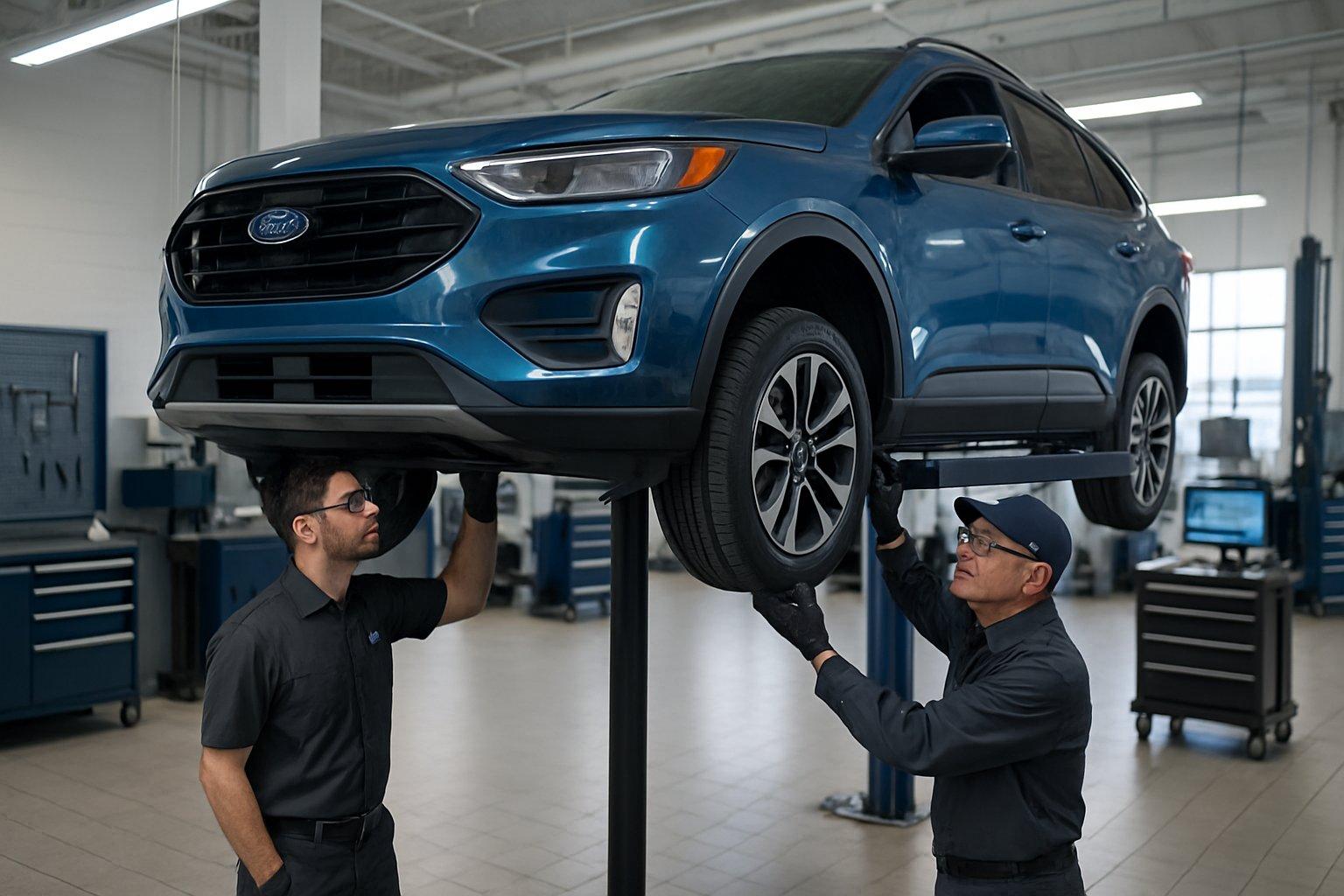
Ford owners can get free recall repairs at dealerships, or sometimes even get software updates over the air. Doesn’t matter if your warranty’s expired—recall repairs are always free.
Scheduling a Service Appointment
I usually call my local dealer or Ford’s Customer Relationship Center at (800) 392-3673 to book a recall repair. The service folks will check my VIN to see if my car’s affected.
For some 2025 models, Ford’s doing over-the-air (OTA) software fixes. These updates just download straight to your vehicle, so you don’t even need to visit the dealer. The car lets you know when it’s done.
If a physical repair is needed, here’s what I expect:
- Parts availability: Sometimes the dealer has to order parts.
- Repair time: Most fixes take about 1-3 hours.
- Loaner vehicles: Some dealers offer these for longer repairs.
When I show up, I bring my registration and the recall notice if I have it. The dealer logs the repair in Ford’s system.
Cost and Warranty Information
All Ford recall repairs are totally free. No charge for parts, labor, or diagnostics. Even if your warranty’s long gone, you’re covered.
Ford pays for all this:
- Replacement parts
- Labor for installation
- Diagnostics
- Software updates
I keep my repair records, just in case. Getting a recall fixed doesn’t extend my original warranty, but the part they fixed might get extra coverage.
If I paid for a repair before Ford announced the recall, I can ask customer service about getting reimbursed. Gotta have the receipts and proof that the repair was for the recall issue.
Impact of 2025 Recalls on Ford’s Reputation
Ford’s massive 120+ recalls in 2025 have been a real headache for their reputation. The company had to scramble to keep customers happy and try to hold onto trust with so many recalls out there.
Response From Ford Motor Company
Ford’s been upfront with customers and regulators about the situation. They’ve put out statements stressing their focus on safety.
They keep saying they’re being proactive—finding problems faster thanks to better testing and quality checks.
There are now special customer service teams for recall questions. Ford’s also improved their notification system to get the word out quicker.
What Ford’s actually done:
- More communication with NHTSA
- Stricter quality testing
- Extra customer service staff
- Quicker recall handling
They’re also putting more money into manufacturing upgrades, hoping to catch issues before cars even leave the factory. Let’s see if it works.
Customer Trust and Satisfaction
The recall record has left a mark on how customers see Ford’s reliability. Some buyers say they’re nervous about picking up a new Ford.
I’ve seen all sorts of reactions from Ford owners. Long-time customers often stick by the brand, but folks considering their first Ford seem a bit more cautious.
Customer Impact Areas:
- Resale values – A few Ford models saw prices dip
- Purchase decisions – Shoppers are digging deeper into recall histories
- Service experiences – More trips to the dealership for recall fixes
Ford’s customer satisfaction scores dropped in several industry surveys.
Still, the company held onto strong marks for how it handles recall repairs. Plenty of customers seem to appreciate Ford’s openness about safety problems.
Their fast action on serious safety recalls has helped keep some trust alive, at least for now.