
Your car’s water pump keeps the engine cool by moving coolant through the system. If it starts to fail, you need to spot the warning signs fast or risk expensive engine damage.
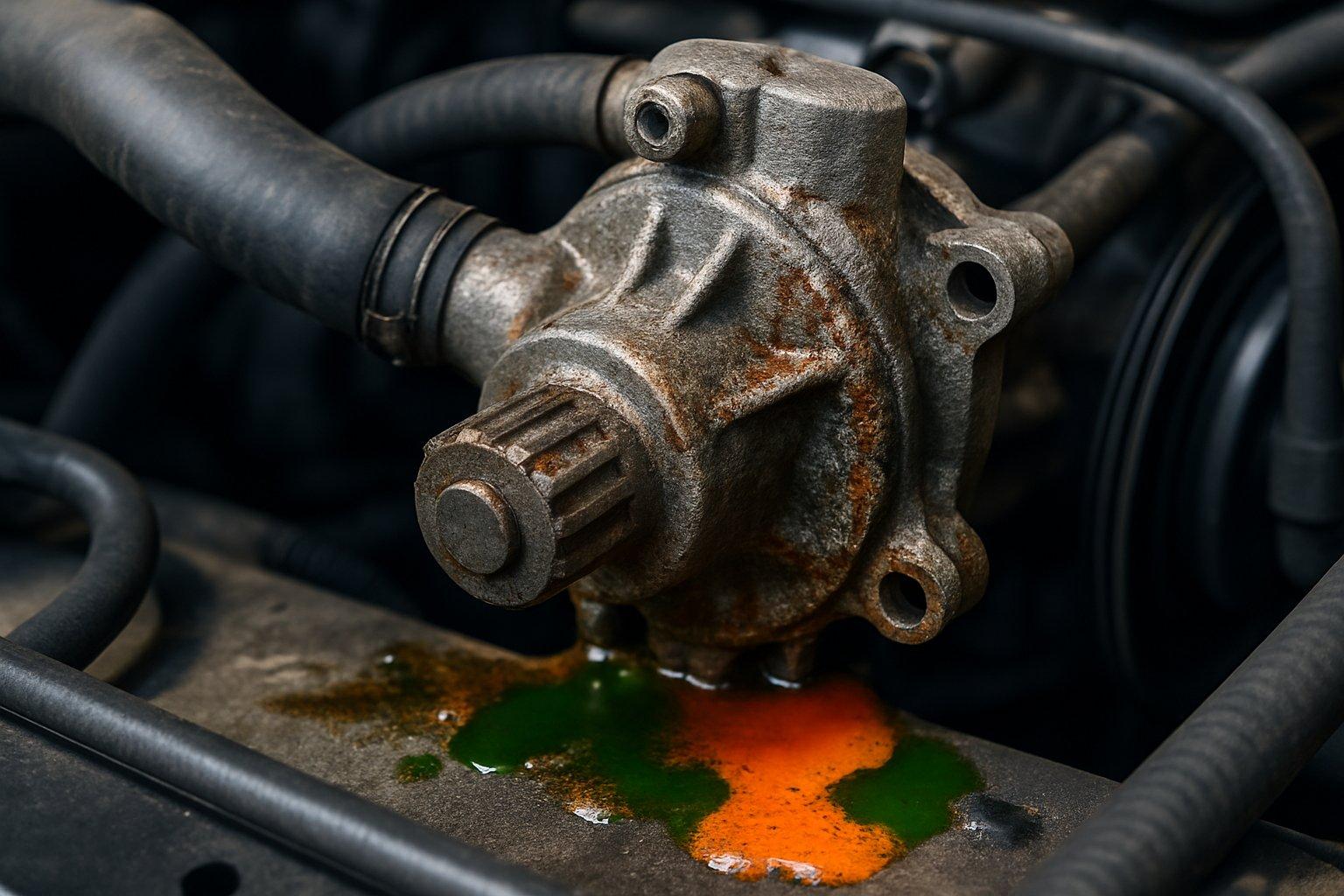
The most common symptoms of a failing water pump include overheating, coolant leaks under your car, odd squealing or whining noises, and sometimes steam from under the hood. These signs might sneak up on you, but ignoring them? That’s just asking for trouble.
Let’s get into how to spot these issues, what they mean for your engine, and when it’s time to call in a pro. Knowing these symptoms might just save you a fortune—and keep you from getting stranded somewhere inconvenient.
What Is a Water Pump and Its Function in a Vehicle
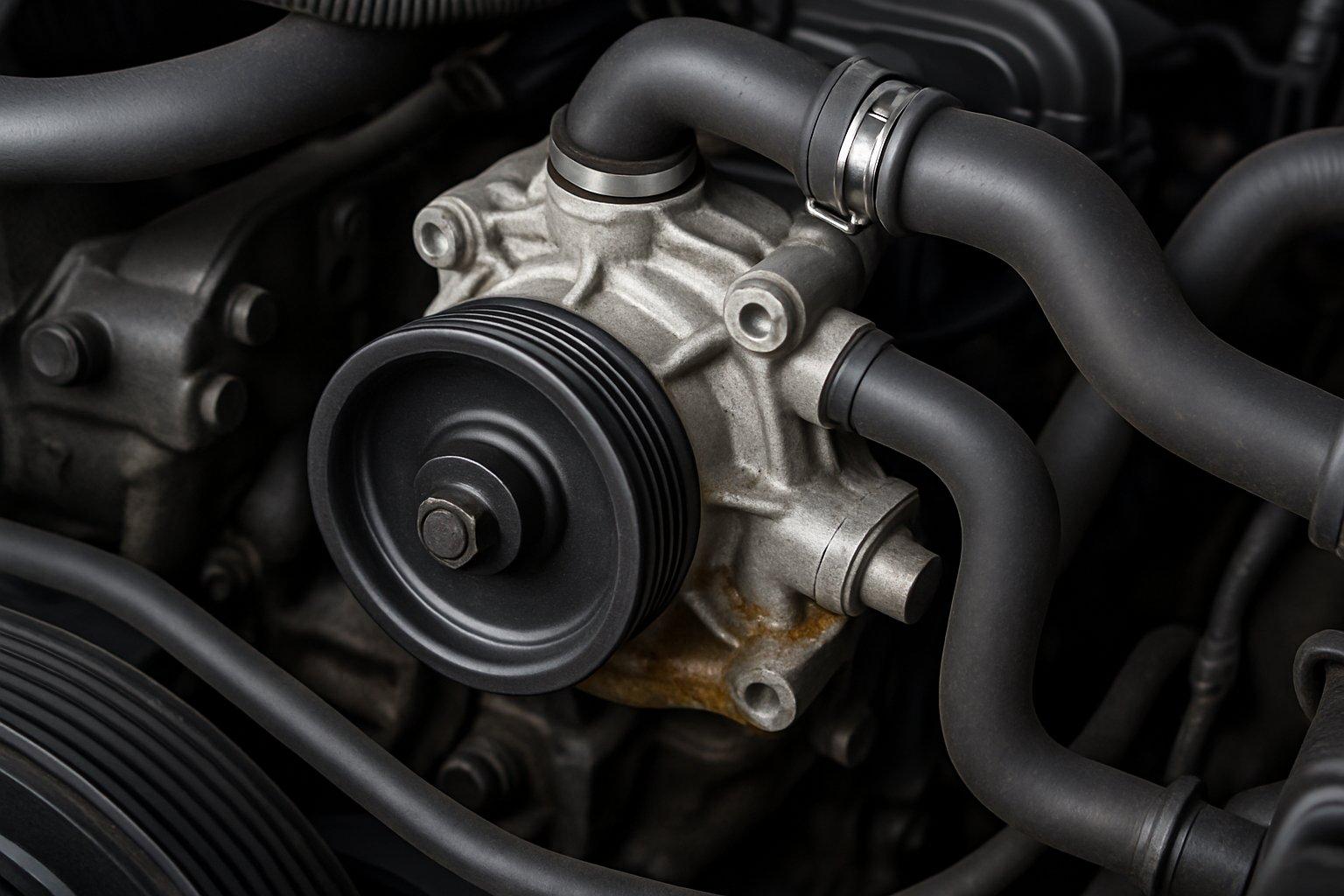
A water pump moves coolant through your engine to keep it from overheating. It sits in a specific spot in the engine bay, and its design depends on your car.
Role in Engine Cooling System
The water pump is basically the heart of your car’s cooling system. Think of it like your heart pumping blood—except here, it’s coolant running through the engine.
Primary Functions:
- Pushes coolant from the radiator into the engine
- Keeps engine temperature steady
- Prevents overheating
- Makes sure coolant keeps moving
The pump draws cool liquid from the radiator, then pushes it through the engine block and head. Hot coolant soaks up engine heat, then heads back to the radiator to cool off.
If the water pump stops working, the coolant just sits there. That means your engine can overheat in a matter of minutes.
Location of the Water Pump in the Engine
Usually, the water pump is mounted right on the front of the engine. It bolts directly to the engine block.
Common Locations:
- Front of engine block
- Behind the cooling fan
- Near the lower radiator hose
- Connected to the timing or serpentine belt
You’ll often spot it from the front of the car, connected by a pulley system to the crankshaft. Belts keep it spinning.
Some cars have the pump on the engine’s side, but it depends on the make and model. If you follow the lower radiator hose, you’ll usually find the pump’s inlet.
Types of Water Pumps
Modern vehicles use two main types: mechanical and electric. Each has its quirks and maintenance needs.
Mechanical Water Pumps:
- Belt-driven by the engine
- Most common
- Cheaper to replace
- Runs whenever the engine does
Electric Water Pumps:
- Powered by the car’s electrical system
- Found in newer or high-efficiency engines
- Can run even if the engine’s off
- Offer more precise temperature control
Mechanical pumps spin faster as the engine revs higher. Electric pumps let the computer decide how much coolant to move, which is pretty clever.
Some hybrids and EVs rely only on electric pumps, so they can keep cooling things down even when the engine isn’t running.
Common Symptoms of a Failing Water Pump
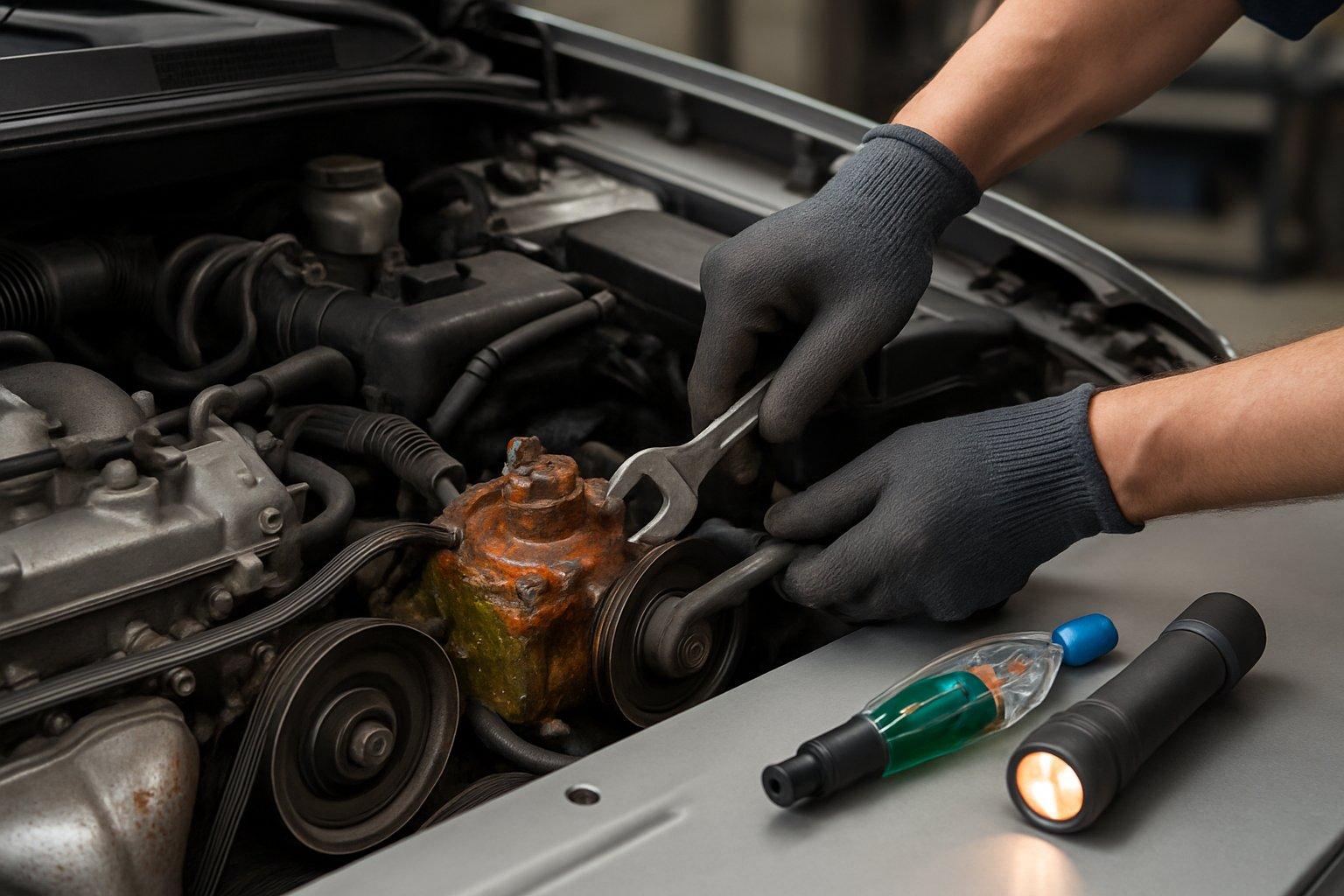
A failing water pump gives you clues if you know what to look for. You might see fluid leaks, the engine running too hot, weird noises, or even steam from the radiator.
Coolant Leaks Under Vehicle
Coolant puddles are usually the first thing I notice when a water pump is in trouble. The leak shows up under the front center of your car—right where the pump sits.
Fresh coolant is bright green, orange, or pink, depending on what you use. Old leaks can look rusty or brown on the pavement.
Common leak spots:
- Water pump gasket
- Pump housing cracks
- Weep hole in the pump
- Hose connections
That little weep hole is worth mentioning. It lets coolant drip if the internal seals go bad, acting like an early warning sign.
Sometimes leaks only show up after the car sits overnight. Big leaks can leave a puddle in just a few minutes after you park.
Overheating Engine
If your water pump fails, engine temperature climbs fast. The coolant just can’t circulate, so heat builds up quickly.
The temp gauge will start creeping up—most cars like to stay between 195-220°F. If you see it heading for the red, that’s bad news.
Warning signs:
- Gauge in the red zone
- Dashboard warning lights
- Hot air from the heater
- Loss of engine power
Overheating can happen faster in traffic or on hot days. On the highway, airflow might hide the issue for a bit, but it won’t fix it.
If you ignore a hot engine, you’re risking real damage—sometimes in just a few minutes.
Unusual Noises from the Water Pump
Strange sounds are a dead giveaway. I listen for them every time I pop the hood.
Grinding or scraping means the bearings inside the pump are shot. That noise gets worse as things wear down.
Squealing or chirping is usually a loose or worn belt. The pitch can change with engine speed.
Rattling means something’s loose or the impeller blades are hitting the inside of the pump.
I like to check for noise with the engine running and the hood open. The sounds usually come from the front of the engine—right where the pump is.
Noises start quietly but get louder if you let them go. Catching them early can save you a lot of hassle.
Steam from the Radiator
Steam from the radiator area is a big red flag. It means the coolant is boiling, and you’ve got a serious problem.
You’ll see white vapor coming from under the hood, often with a sweet smell from the coolant.
Steam shows the cooling system just can’t keep up. The water pump probably isn’t moving coolant through the radiator anymore.
If you see steam, do this:
- Pullover safely
- Turn off the engine
- Wait for things to cool down before checking the coolant
- Consider calling for help
Don’t ever open the radiator cap while it’s hot—pressurized coolant can burn you badly.
Steam, plus leaks or overheating, usually means the pump’s done for. Don’t wait around—get it checked out right away.
Visual Signs Indicating Water Pump Failure
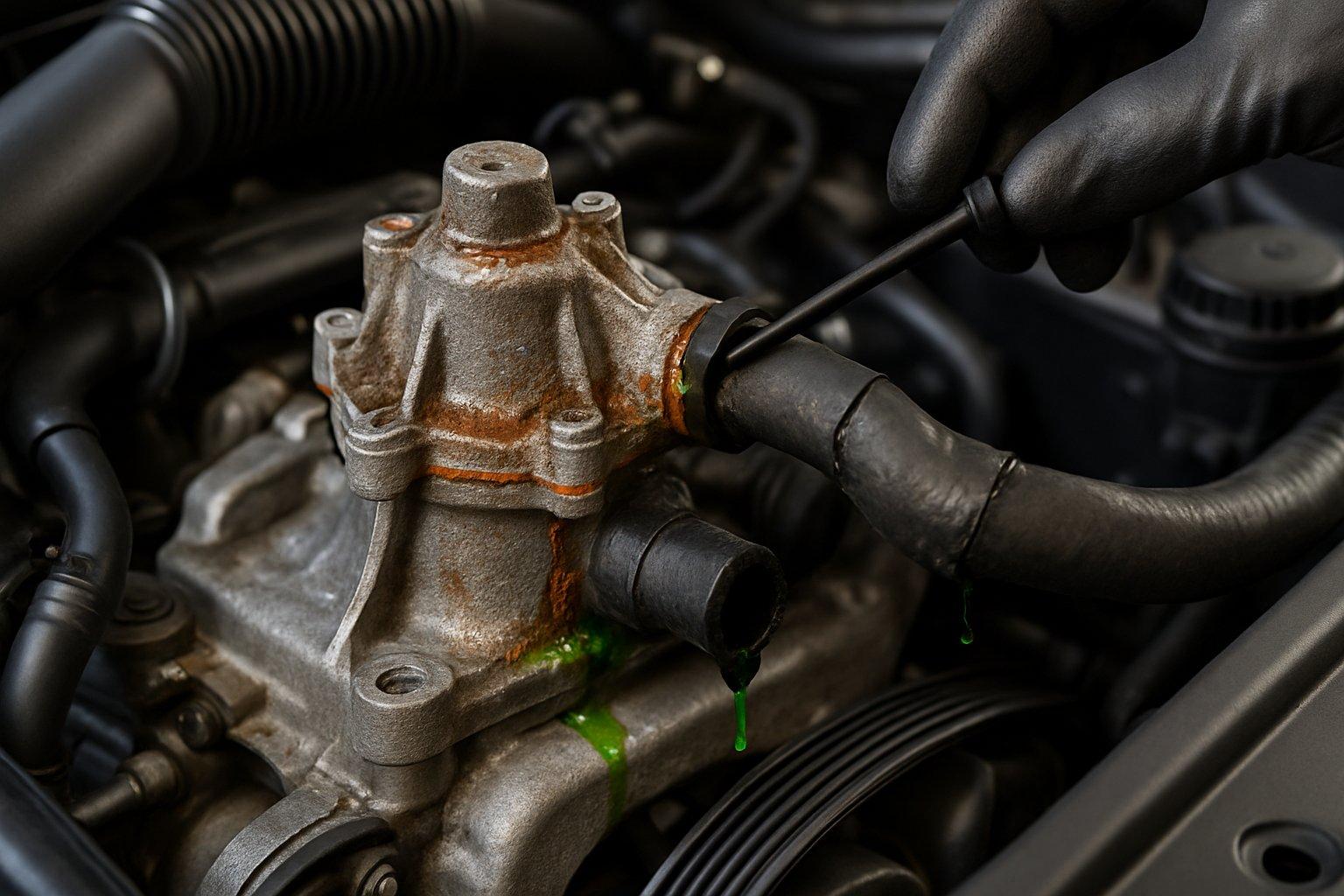
Sometimes, just looking at your water pump tells you a lot. Rust, pulley wear, and dried coolant around the pump are the big things to check for.
Corroded or Rusty Water Pump
Corrosion shows up as orange or brown rust spots on the pump. This happens if the coolant breaks down or air sneaks into the system.
What to look for:
- Orange or reddish stains on metal
- White or green crust near connections
- Pitted or rough surfaces
- Flaky metal bits nearby
White or green buildup can also appear from old coolant turning acidic. Rust weakens the metal and can punch holes right through.
If you see heavy rust, the pump’s probably on its last legs. Light surface rust isn’t great, but deep corrosion? Time for a new pump.
Don’t forget to check the bolts and connections. Rusty bolts can snap and let the pump come loose.
Damaged or Worn Pulley
The water pump pulley is what the belt rides on. Look for cracks, chips, or a pulley that’s bent out of shape.
A bad pulley can make noise when the engine runs and might wobble or vibrate. Watch it while someone starts the engine—you’ll see if it’s off.
Signs of trouble:
- Cracks in the pulley
- Bent or warped edges
- The pulley moves when pushed
- Belt grooves look worn out
The grooves should be smooth. If they’re worn, the belt can slip, and the pump won’t work right. Less coolant flow means more heat.
Make sure the pulley sits straight. If it’s tilted, the pump shaft or bearings might be toast.
Coolant Residue Around Pump
Dried coolant leaves colored stains and crusty deposits. You’ll spot these around the pump, gaskets, or nearby parts.
Fresh leaks look wet and slippery. Old ones dry out and turn flaky—you can usually scrape them off with a fingernail.
Where leaks show up:
- Weep hole: Tiny hole at the bottom of the pump
- Gasket areas: Where the pump bolts on
- Hose connections: Where hoses meet the pump
The weep hole is there to let you know if seals inside the pump have failed. Any fluid from here means it’s time for a replacement.
Sometimes you’ll see steam or smell that sweet coolant odor near the pump. That’s hot coolant hitting engine parts and evaporating.
The color of the stain—green, orange, or pink—can even tell you what kind of coolant is leaking and if it’s fresh or old.
Unusual Noises Associated with Water Pump Issues
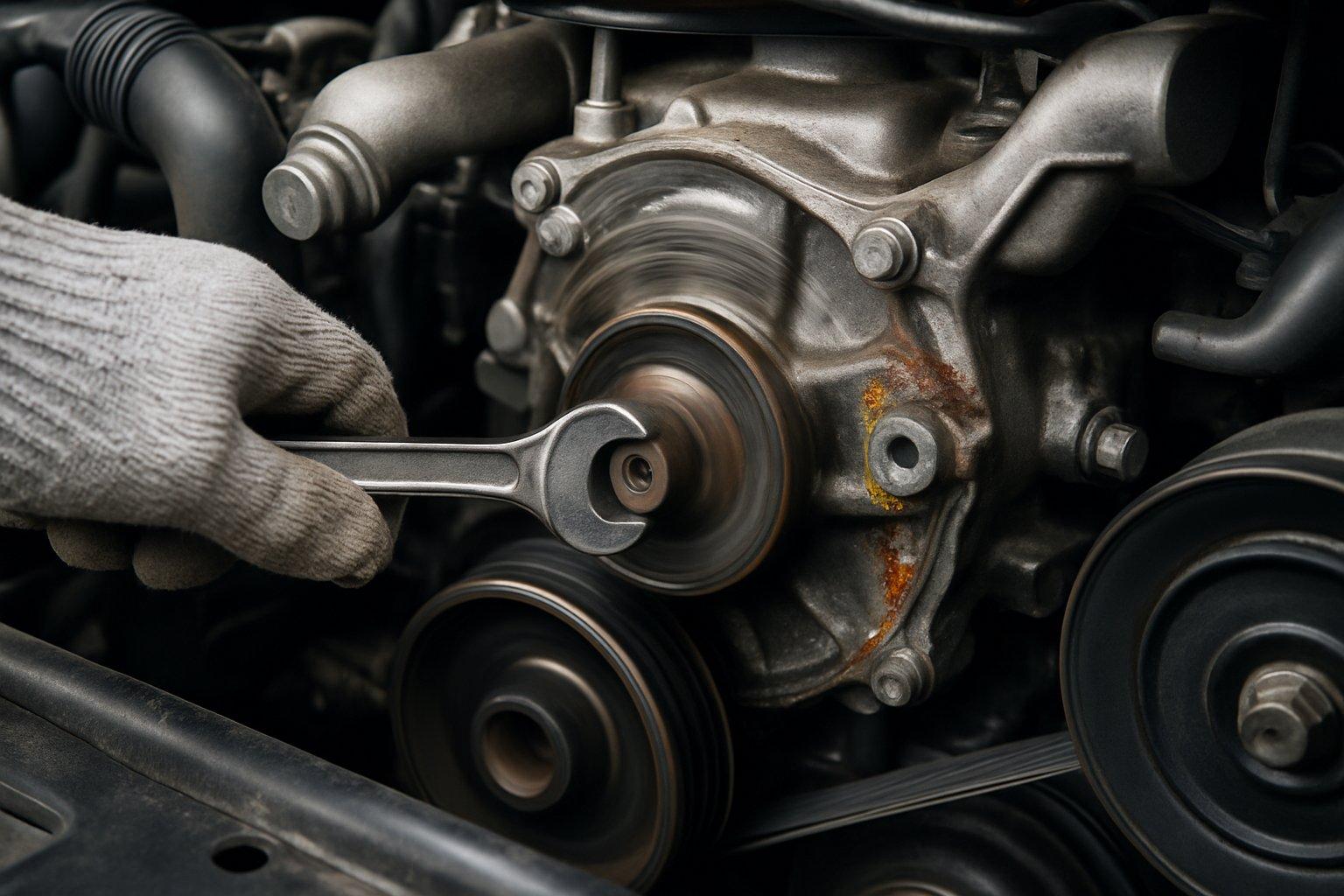
A bad water pump makes noises you can’t really miss. Grinding, squealing, and whining all point to something going wrong inside—or with the belt.
Grinding or Squealing Sounds
Grinding usually means the water pump bearings are giving up. These bearings let the pump spin smoothly, but when they’re shot, metal scrapes on metal.
The grinding gets louder over time—especially when you first start the car cold. Sometimes, the sound fades when things warm up, but it’s still there.
Squealing is a little different. It can mean:
- Loose drive belt
- Worn-out belt
- Pulleys out of line
- Bad belt tensioner
Squealing usually happens when you accelerate. Grinding tends to stick around no matter how fast you’re going. Either way, it’s time to check things out.
If you hear a high-pitched squeal, check the belt first. If the belt looks fine, the pump bearings might be the culprit.
Whining Noise When the Engine Is Running
Whining sounds usually mean there’s internal water pump damage. I tend to hear this when the impeller inside breaks or gets out of balance.
The impeller’s job is to push coolant through the engine. When it’s damaged, it can’t do that right.
This noise comes across as a low whine or sometimes a groaning sound. Damaged parts stir up turbulence in the coolant flow.
The whine gets louder as the engine RPMs climb. It’s honestly hard to ignore once you notice it.
Cavitation can also make whining noises. That’s when air bubbles form in the coolant—never a good sign.
Those bubbles collapse and make a sound like marbles rattling around. It’s weirdly distinct if you’ve ever heard it.
Low coolant levels are usually to blame for cavitation. If I hear whining, I check my coolant right away.
Cavitation will shred the impeller in just a few weeks if you let it go. It’s one of those things you really shouldn’t ignore.
At first, the whining might come and go. Eventually, though, it sticks around as the damage gets worse.
Impacts of a Failing Water Pump on Engine Performance
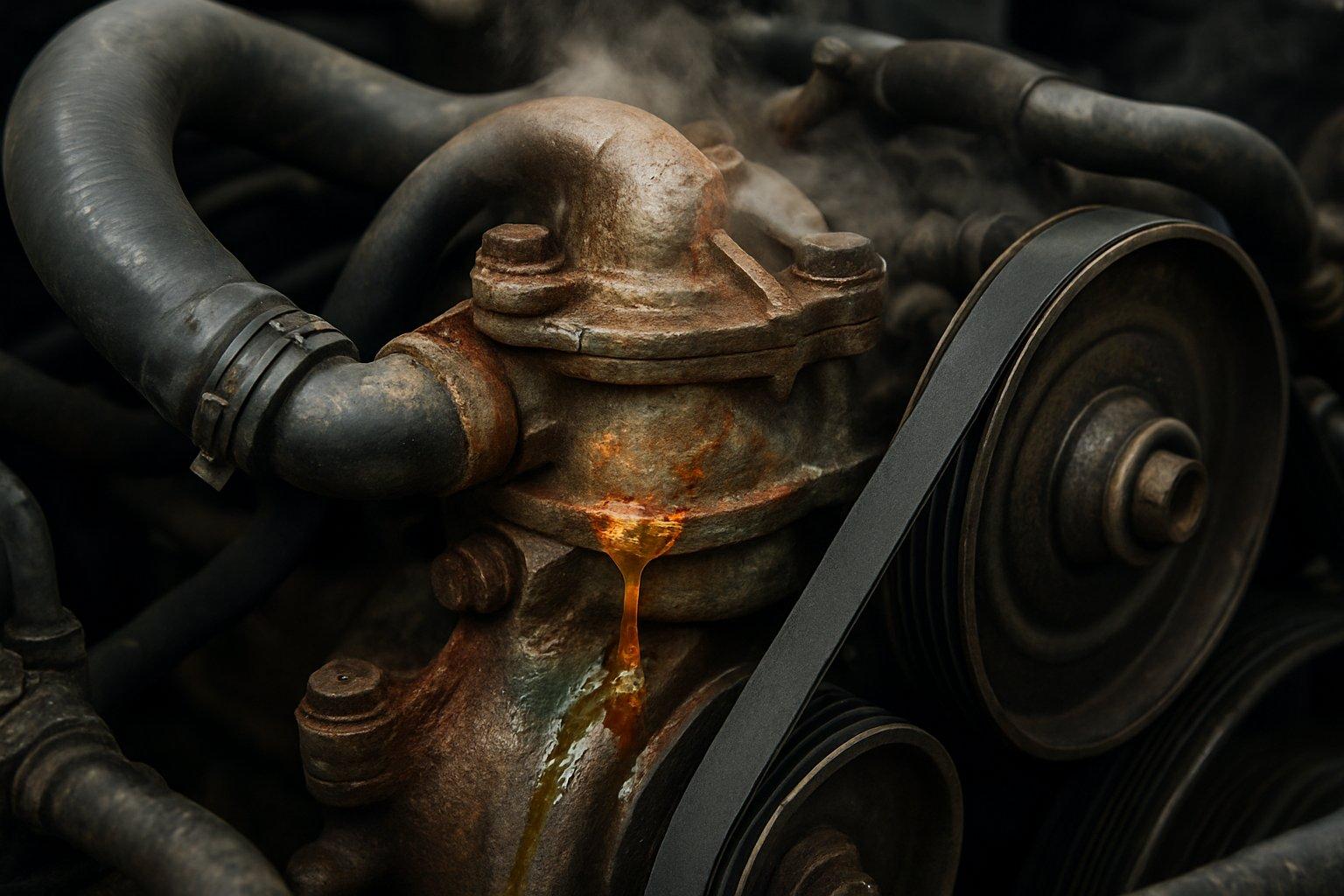
A bad water pump throws your engine’s cooling system out of whack. Suddenly, efficiency drops and you risk some pretty serious mechanical damage.
The pump can’t move coolant like it’s supposed to. Engine temperature starts creeping up, and performance just isn’t the same.
Reduced Engine Efficiency
When my water pump starts to go, I notice some changes right away. The most obvious is that the temperature needle climbs higher than it should.
The engine runs hotter. That’s because the coolant isn’t circulating properly anymore.
Hot spots pop up in different parts of the engine. Those areas just aren’t getting cooled off like they’re supposed to.
Common efficiency problems I see:
- Sluggish acceleration
- Rough idling
- Poor fuel economy
- Reduced power output
The engine computer tries to save itself from overheating. It cuts power and messes with timing to keep things from getting worse.
This makes the car feel less peppy. Sometimes there’s a weird hesitation when I hit the gas.
Potential for Engine Damage
If the water pump fails completely, the engine can be toast in minutes. No coolant means temperatures skyrocket fast.
Critical damage that can happen:
- Warped cylinder heads
- Blown head gaskets
- Cracked engine blocks
- Seized pistons
Extreme heat can crack the engine block. At that point, you’re looking at a full engine replacement, which is brutal.
Head gaskets blow when things get too hot. That lets coolant and oil mix, which is a nightmare for the engine’s internals.
Pistons can seize inside their cylinders. When that happens, the engine stops—major repairs needed.
The cost difference is wild. A water pump might set you back $800, but a cooked engine can be $8,000 or more.
Safety Risks and Long-Term Effects
A failing water pump isn’t just annoying—it can wreck your engine for good. Ignore the warning signs, and the damage stacks up fast.
Risk of Complete Engine Seizure
Engine seizure is when metal parts get so hot that they literally weld together. That happens when the coolant stops moving because the pump’s shot.
Without coolant, engine temps spike in minutes. Over 250°F is possible before you even realize it.
Pistons expand from all that heat and get stuck in the cylinders. Once they’re jammed, nothing’s moving.
Critical temperature thresholds:
- Normal: 195-220°F
- Danger zone: 230°F and up
- Seizure risk: 250°F+
I’ve seen engines lock up in 5-10 minutes after a water pump fails. Rebuilding an engine after that? Anywhere from $3,000 to $8,000.
Metal parts warp when they overheat. The cylinder head can crack, and sometimes the block gets permanent damage.
Consequences of Ignoring Symptoms
Wait too long to fix a water pump and you’ll pay for it. Tiny leaks become total failures before you know it.
What could’ve been a $300 fix turns into a $2,000+ headache. Other parts get damaged too.
Common extra damage:
- Cracked radiator from overheating
- Warped cylinder head gasket
- Damaged thermostat and housing
- Corroded cooling system parts
Hot engines ruin the oil, making it useless for protecting moving parts. That’s just asking for trouble.
And if the pump gives out while you’re driving, you could end up stranded. Emergency towing and roadside repairs are never cheap.
Coolant leaks can mess with the electronics, too. That fluid eats away at wiring and computer modules under the hood.
Next Steps and Professional Diagnosis
Notice any warning signs? It’s honestly best to act fast—major engine damage isn’t worth the risk. Mechanics have the tools to figure out the problem and what it’ll take to fix it.
When to Seek Mechanic Assistance
If your engine overheats or you spot coolant puddles, call a mechanic right away. That’s a big red flag for water pump failure.
Don’t keep driving if the temperature gauge is in the red. You could ruin your engine in just a few minutes.
If you notice more than one symptom—like grinding noises plus coolant leaks—get help sooner rather than later.
Call a mechanic right away if you notice:
- Engine temp is higher than normal
- Big coolant leaks or puddles
- Steam coming from the engine
- Grinding or whining noises at the front of the engine
If it’s just a minor symptom, you might have a few days, but don’t push your luck. Waiting weeks is a bad idea.
Diagnostic Procedures for Water Pump Failure
A good mechanic starts by checking your coolant levels. They’ll look for any obvious leaks.
Next, they examine the water pump pulley for play or a little wobble. Sometimes, even a small amount can mean trouble.
The mechanic will test your cooling system’s pressure. This helps find leaks you can’t see and shows if the water pump seals are letting go.
If your pump’s electric, they’ll check how much power it’s drawing. Too much? That’s a red flag—the pump’s probably struggling.
Common diagnostic steps include:
| Test Type | What It Checks | Time Needed |
|---|---|---|
| Visual inspection | External leaks and damage | 10-15 minutes |
| Pressure test | Internal seal failures | 20-30 minutes |
| Temperature check | Cooling system function | 15-20 minutes |
| Belt inspection | Drive system problems | 5-10 minutes |
The mechanic might run the engine and watch the coolant flow. If the coolant isn’t moving, well, that’s a pretty clear sign the pump’s not doing its job.
2 thoughts on “Failing Water Pump Symptoms: Early Warning Signs Every Car Owner Should Know”
Comments are closed.